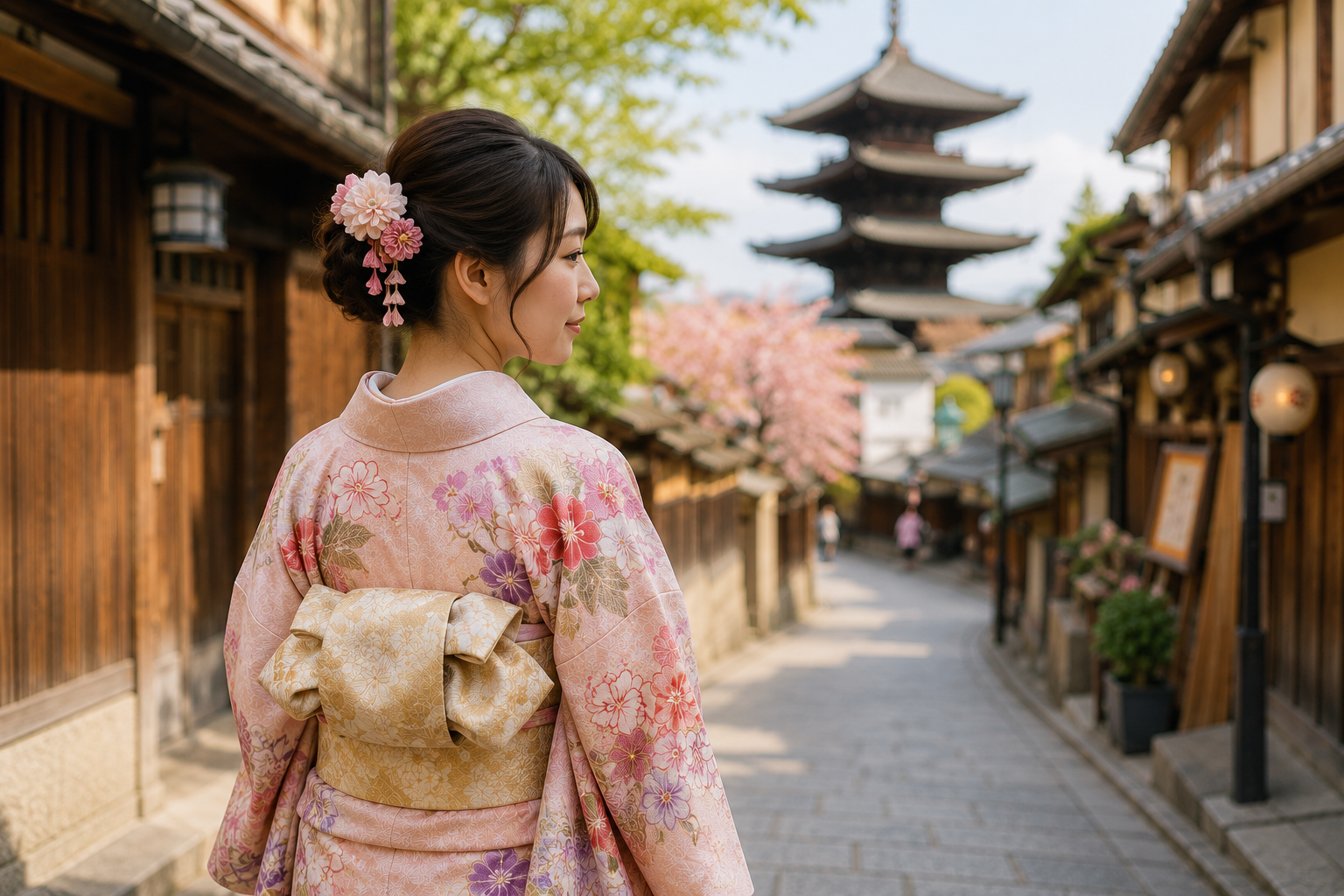
Wearing a kimono is a fun way to experience traditional Japanese culture while exploring Tokyo.
You don’t need to buy one or know how to put one on yourself. Kimono rental shops provide professional dressing, and many also offer hairstyling, photography, and other cultural experiences.
Asakusa is the most popular area for kimono experiences, but there are several different options depending on what you want to do.
Kimono Rental in Asakusa
Best for: First-time visitors and sightseeing
Asakusa is one of the best places in Tokyo to rent a kimono.
After getting dressed, you can walk around:
- Senso-ji Temple
- Nakamise Street
- Kaminarimon
- Sumida River
- Traditional streets around Asakusa
Many rental shops offer a wide selection of kimono, obi belts, bags, and accessories.
You’ll normally return the kimono to the shop later the same day.
Check current kimono rental options in Asakusa.
Kimono Rental with Hairstyling
Best for: Photos and a more complete experience
If you’re planning to take plenty of photos, look for a package that includes professional hairstyling.
Some packages include simple hair arrangements, while more elaborate styles may cost extra.
Hair accessories may also be included or available as an optional upgrade.
Check exactly what your package includes before booking.
Check current kimono rental and hairstyling packages.
Kimono & Professional Photography
Best for: Couples, families, and special occasions
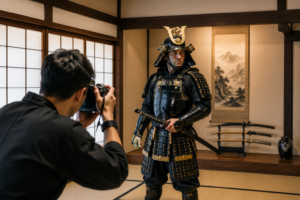
Instead of relying entirely on phone photos, you can book a kimono experience with a professional photographer.
Depending on the package, the photographer may take you around Asakusa or another scenic neighborhood for an outdoor photo session.
This can be especially nice for:
- Couples
- Families
- Honeymoons
- Anniversaries
- Solo travelers who want good photos
Check current kimono photography experiences in Tokyo.
Kimono & Tea Ceremony Experience
Best for: Experiencing more Japanese culture in one booking
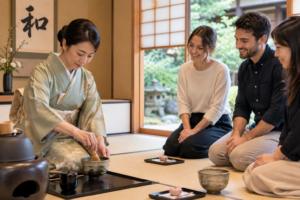
If both kimono and a Japanese tea ceremony are on your list, consider combining them.
You’ll be dressed in a kimono before participating in a beginner-friendly tea ceremony.
Some experiences also include Japanese sweets and the opportunity to prepare matcha yourself.
This is an easy way to enjoy two traditional experiences without arranging separate bookings.
Check current kimono and tea ceremony experiences.
Kimono Experiences for Couples
Best for: Couples and honeymooners
Many kimono rental shops offer packages for two people.
Men’s kimono are available as well, so couples can both dress in traditional clothing and explore Tokyo together.
Asakusa is particularly good for this because there are plenty of traditional backgrounds for photos within walking distance.
Kimono Experiences for Families
Best for: Family photos and cultural experiences
Some kimono rental shops provide children’s kimono as well as adult sizes.
This can make a great family activity and create memorable photos from your trip.
However, children’s sizes and minimum ages vary between shops.
If you’re traveling with young children, check availability before booking rather than assuming the shop will have the correct size.
Kimono or Yukata?
The clothing available may depend on the season.
A kimono is generally more layered and formal.
A yukata is lighter and is especially popular during Japan’s hot summer months and summer festivals.
If you’re visiting Tokyo in July or August, a yukata may be much more comfortable for walking outside.
Rental shops may offer different seasonal packages, so check what’s available for your travel dates.
How Long Can You Wear the Kimono?
Many standard rental plans allow you to wear the kimono for several hours and return it later the same day.
The exact return time varies by shop.
Pay close attention to the return deadline, especially if you book an afternoon appointment.
Some shops may also offer next-day return or hotel return options for an additional fee.
What Is Usually Included?
A basic kimono rental package may include:
- Kimono
- Obi
- Traditional bag
- Footwear
- Dressing assistance
Depending on the package, hairstyling and accessories may be included or charged separately.
Photography is usually a separate package unless specifically stated.
Always compare what’s included rather than looking only at the starting price.
What Should You Wear Under a Kimono?
Wear comfortable, relatively thin clothing that is easy to change out of.
The rental shop will provide the necessary garments for wearing the kimono.
During colder months, ask the shop what you can wear underneath without affecting the fit.
In summer, remember that Tokyo can be extremely hot and humid. Even a beautiful kimono can become uncomfortable after several hours outside.
Is Kimono Rental Cultural Appropriation?
International visitors are generally welcome to enjoy kimono experiences in Japan when they wear the clothing respectfully.
Kimono rental businesses actively offer these experiences to visitors from around the world, and professional staff will help you wear the clothing correctly.
Treat temples, shrines, and traditional spaces respectfully while taking photos, just as you would when wearing regular clothing.
What Happens If It Rains?
You can still wear a kimono in light rain, but walking around outside may be less enjoyable.
Some shops provide umbrellas, but policies vary.
If heavy rain is forecast, check the cancellation or rescheduling policy for your booking.
A kimono experience combined with an indoor tea ceremony can be a good alternative on a rainy day.
If this is your first kimono experience in Tokyo, Asakusa is the easiest choice.
There are many rental shops, and once you’re dressed you don’t need to travel anywhere else. Senso-ji, Nakamise Street, Kaminarimon, and plenty of smaller traditional streets are all nearby.
Book an earlier appointment if possible. You’ll have more time to enjoy wearing the kimono without constantly checking the return deadline.
And during Tokyo’s hottest summer months, seriously consider a yukata instead of a full kimono. Looking good in photos is nice, but enjoying your day is more important!
Related Guides
・Best Unique Experiences in Tokyo
・Best Tea Ceremony Experiences in Tokyo
・Best Traditional Craft Experiences in Tokyo
・Which Shrine Should You Visit in Tokyo?
・Best Things to Do in Tokyo