Japanese Etiquette: Things Japanese People Generally Don’t Do (2026 Guide for First-Time Visitors)
Japan is known for its cleanliness, order, and consideration for others. While visitors aren’t expected to know every custom, understanding a few simple etiquette rules can help you avoid awkward situations and show respect for local culture.
Here are some things Japanese people generally don’t do—and some practical tips to help you feel more confident during your trip.
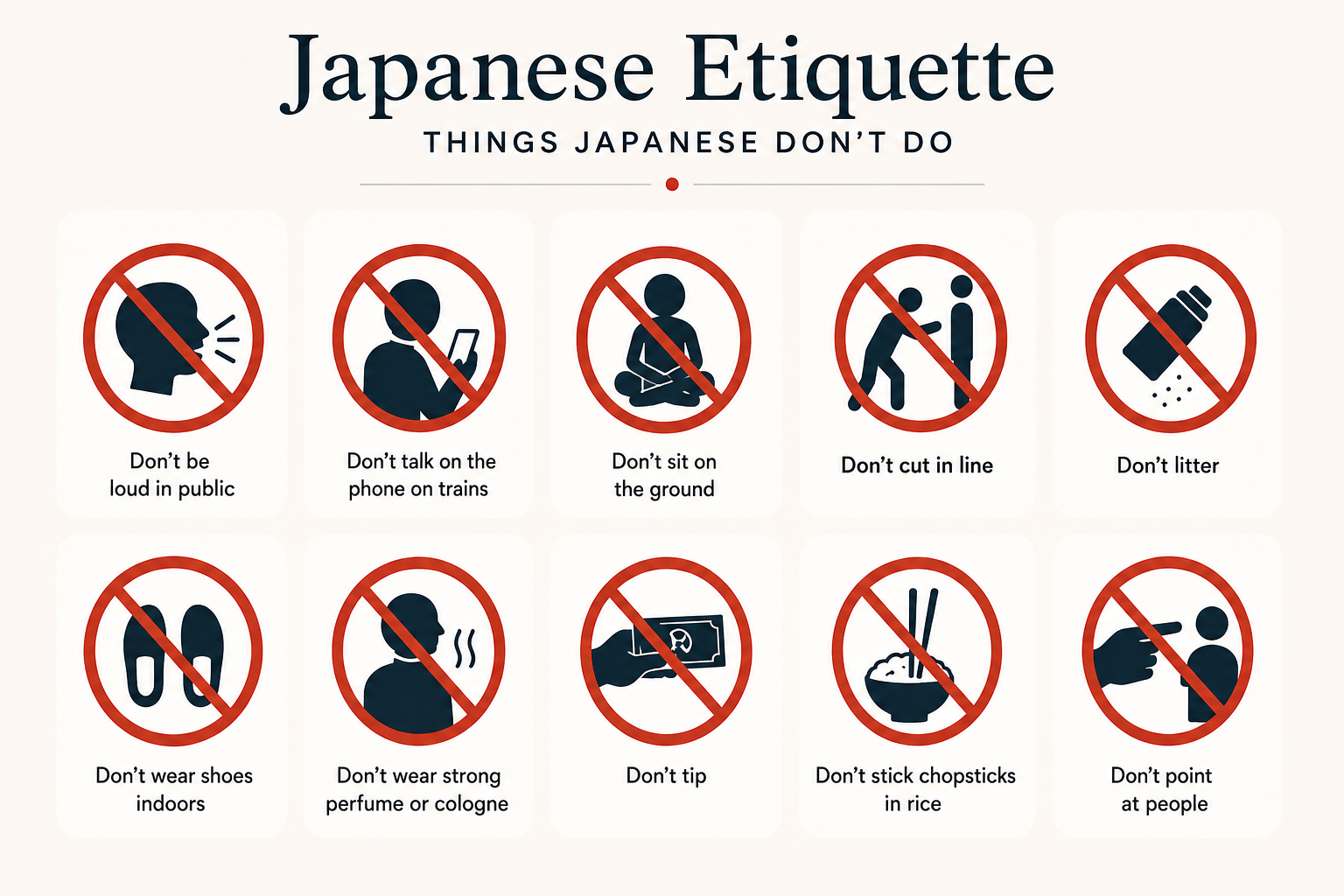
1. They Don’t Talk Loudly on Trains
Public transportation in Japan is usually quiet. Many people use their commute to rest, read, or listen to music.
Good Etiquette
- Speak quietly.
- Set your phone to silent mode.
- Move phone calls outside the train whenever possible.
2. They Don’t Usually Sit on the Ground in Public Places
Unlike in some countries, it’s uncommon to sit directly on sidewalks, station floors, or busy public spaces unless there’s a designated area.
Good Etiquette
- Use benches whenever possible.
- Sit on a picnic blanket in parks if appropriate.
- Avoid sitting on station floors or busy walkways.
- Keep pathways clear for other pedestrians.
3. They Don’t Cut in Line
Whether you’re at a train station, convenience store, or tourist attraction, people generally wait patiently for their turn.
Good Etiquette
- Join the end of the line.
- Follow the floor markings at stations.
- Wait your turn.
4. They Don’t Leave Trash Behind
Japan has surprisingly few public trash bins, yet the streets remain very clean because people usually take their rubbish home or dispose of it properly later.
Good Etiquette
- Carry a small plastic bag for your trash.
- Use recycling bins when available.
- If you can’t find a bin, take your rubbish back to your hotel.
5. They Don’t Wear Shoes Indoors
Many homes, traditional accommodations, temples, and some restaurants require you to remove your shoes before entering.
Good Etiquette
- Look for a shoe-removal area near the entrance.
- Wear clean socks.
- Follow any posted instructions.
6. They Don’t Tip
Tipping isn’t part of Japanese culture and can sometimes cause confusion.
Good Etiquette
- Simply say “Thank you.”
- Excellent service is already included.
- No extra payment is expected.
7. They Don’t Use Strong Perfume in Public
Many Japanese people prefer subtle fragrances, especially in crowded places such as trains and elevators.
Good Etiquette
- Use perfume sparingly.
- Be considerate in enclosed spaces.
8. They Don’t Smoke Anywhere They Want
Many cities have designated smoking areas, and smoking while walking is prohibited in some districts.
Good Etiquette
- Smoke only in designated areas.
- Follow local signs and regulations.
9. They Don’t Point at People
Pointing directly at someone is generally considered impolite.
Good Etiquette
- Use an open hand when indicating a direction or person.
- Keep gestures polite and respectful.
10. They Don’t Stick Chopsticks Upright in Rice
Standing chopsticks upright in a bowl of rice resembles a funeral ritual and should be avoided.
Good Etiquette
- Place your chopsticks on a chopstick rest or across your plate when not using them.
- Never leave them standing upright in your rice.
11. They Don’t Block Escalators or Walkways
People try to keep traffic moving smoothly, especially in busy stations and shopping areas.
Good Etiquette
- Step aside if you need to stop.
- Avoid standing in doorways.
- Keep your luggage out of busy walkways.
12. They Don’t Ignore Personal Space
Even in crowded cities, people try to avoid disturbing those around them.
Good Etiquette
- Keep conversations at a reasonable volume.
- Avoid unnecessary physical contact.
- Respect shared spaces.
The Most Important Rule
If there’s one etiquette principle that explains many Japanese customs, it’s this:
Try not to inconvenience the people around you.
You don’t need to be perfect. Most Japanese people understand that visitors come from different cultures. Simply being polite, patient, and considerate will go a long way.
My advice is don’t worry about memorizing every etiquette rule before you arrive.
If you’re ever unsure what to do, simply look at what the people around you are doing and follow their lead. Japanese people generally appreciate visitors who make an effort to be respectful, even if they don’t get everything right.
A smile, a little patience, and consideration for others will leave a much better impression than trying to be perfect.
Final Thoughts
Japanese etiquette isn’t about following hundreds of strict rules—it’s about being considerate of the people around you.
By speaking quietly, waiting your turn, keeping public spaces clean, and respecting local customs, you’ll find that traveling in Japan is easy and enjoyable.
Relax, be respectful, and enjoy experiencing one of the world’s most welcoming and orderly cultures.