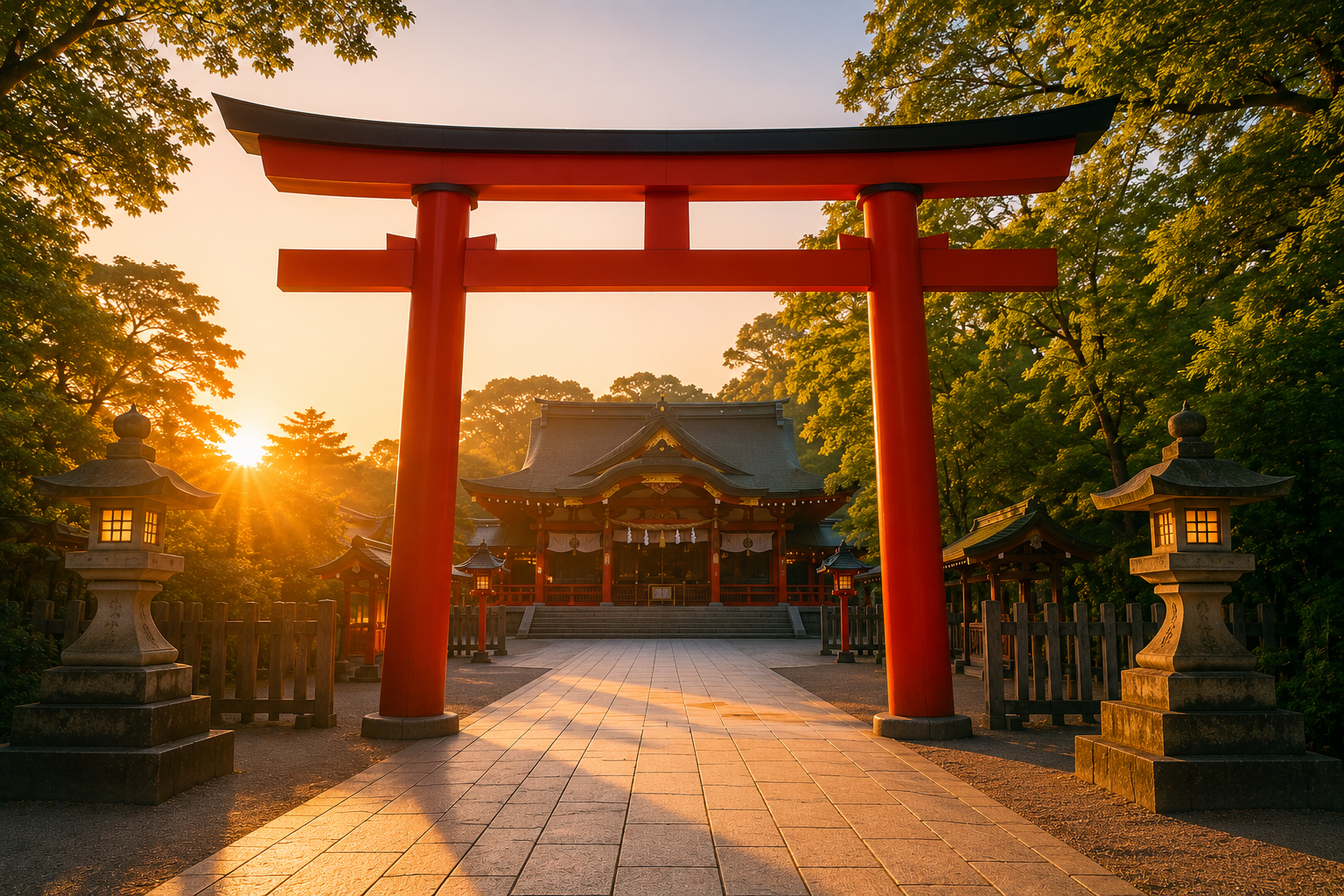
Japan is home to thousands of beautiful shrines and temples, many of which are among the country’s most popular tourist attractions. Whether you’re visiting the famous Senso-ji Temple in Asakusa or the peaceful Meiji Shrine in Tokyo, understanding a few basic customs can make your visit more enjoyable and respectful.
Don’t worry—Japanese people don’t expect tourists to know every tradition perfectly. Simply being respectful is appreciated.
What’s the Difference Between a Shrine and a Temple?
Shinto Shrine
Shrines are associated with Japan’s native Shinto religion.
You can usually recognize a shrine by its large red gate called a Torii Gate.
Popular examples include:
- Meiji Shrine (Tokyo)
- Fushimi Inari Shrine (Kyoto)
- Itsukushima Shrine (Miyajima)
Buddhist Temple
Temples are associated with Buddhism.
They often feature large gates, incense burners, and statues of Buddha.
Popular examples include:
- Senso-ji Temple (Tokyo)
- Kiyomizu-dera Temple (Kyoto)
- Todai-ji Temple (Nara)
How to Enter a Shrine
When entering a shrine, you’ll usually pass through a Torii Gate.
Many visitors pause briefly before entering as a sign of respect.
Walking Through the Torii Gate
Traditionally, the center of the pathway is considered the path of the gods.
If possible, walk slightly to the left or right side rather than directly down the middle.
Don’t worry if you forget—many tourists don’t know this custom.
Purifying Your Hands
Near the entrance, you’ll often find a water pavilion called a Temizuya.
You may see visitors rinsing their hands before approaching the main shrine.
A simple version is:
- Rinse your left hand.
- Rinse your right hand.
- Rinse your left hand again.
- Return the ladle.
It’s perfectly acceptable to skip this if you’re unsure.
How to Pray at a Shrine
Many visitors make a small offering before praying.
A common method is:
- Throw a coin into the offering box.
- Bow twice.
- Clap twice.
- Say a silent prayer or make a wish.
- Bow once more.
This is the typical style at many Shinto shrines.
How to Pray at a Temple
Temples have different customs.
Generally:
- Make a small offering if you wish.
- Put your hands together.
- Say a silent prayer.
- Bow respectfully.
Unlike shrines, clapping is usually not done at Buddhist temples.
Taking Photos
Photography is usually allowed in outdoor areas.
However, some buildings, sacred halls, and statues may prohibit photography.
Always check for signs before taking pictures.
If photography is not allowed, please respect the rules.
Omikuji (Fortune Slips)
Many shrines and temples offer Omikuji, which are fortune-telling paper slips.
Simply make a small donation and draw a fortune.
If you receive a bad fortune, don’t worry! Many visitors tie it to a designated rack and leave it behind.
It’s all part of the experience.
Goshuin (Temple and Shrine Stamps)
Many visitors enjoy collecting Goshuin, beautiful handwritten stamps and calligraphy from shrines and temples.
You can purchase a special Goshuin book and collect unique stamps from places you visit around Japan.
They make excellent souvenirs and travel memories.
What Should You Wear?
There is no strict dress code at most shrines and temples.
However, respectful clothing is appreciated.
Comfortable walking shoes are recommended, as many sites involve a lot of walking and stairs.
Final Tips
- Speak quietly in sacred areas.
- Follow posted signs.
- Respect photography restrictions.
- Take your time and enjoy the peaceful atmosphere.
- Don’t worry about making small mistakes—visitors are welcome.
Visiting a Japanese shrine or temple is not only a cultural experience but also a wonderful opportunity to slow down and appreciate a different side of Japan.
Recommended Places in Tokyo
- Meiji Shrine
- Senso-ji Temple
- Nezu Shrine
- Zojo-ji Temple
- Hie Shrine
Whether you’re interested in history, architecture, or simply finding a peaceful escape from the busy city, Japan’s shrines and temples are well worth a visit.