How to Exchange Money in Japan (2026 Guide for Tourists)
Although Japan is becoming increasingly cashless, many small restaurants, local shops, temples, shrines, and some rural destinations still prefer cash. Having some Japanese yen with you will make your trip much smoother.
This guide explains the easiest and most convenient ways to get Japanese yen during your visit.
1. Withdraw Cash from an ATM (Recommended)
For most travelers, withdrawing cash from an ATM is the easiest, safest, and most cost-effective option.
The best ATMs for international visitors are:
- 7-Eleven (Seven Bank ATM)
- FamilyMart
- Japan Post Bank
Most international cards are accepted, including:
- Visa
- Mastercard
- American Express
- UnionPay
Why We Recommend ATMs
- Better exchange rates than many currency exchange counters
- Convenient locations throughout Japan
- Available at airports, train stations, and convenience stores
- No need to carry large amounts of foreign currency
2. Exchange Money at the Airport
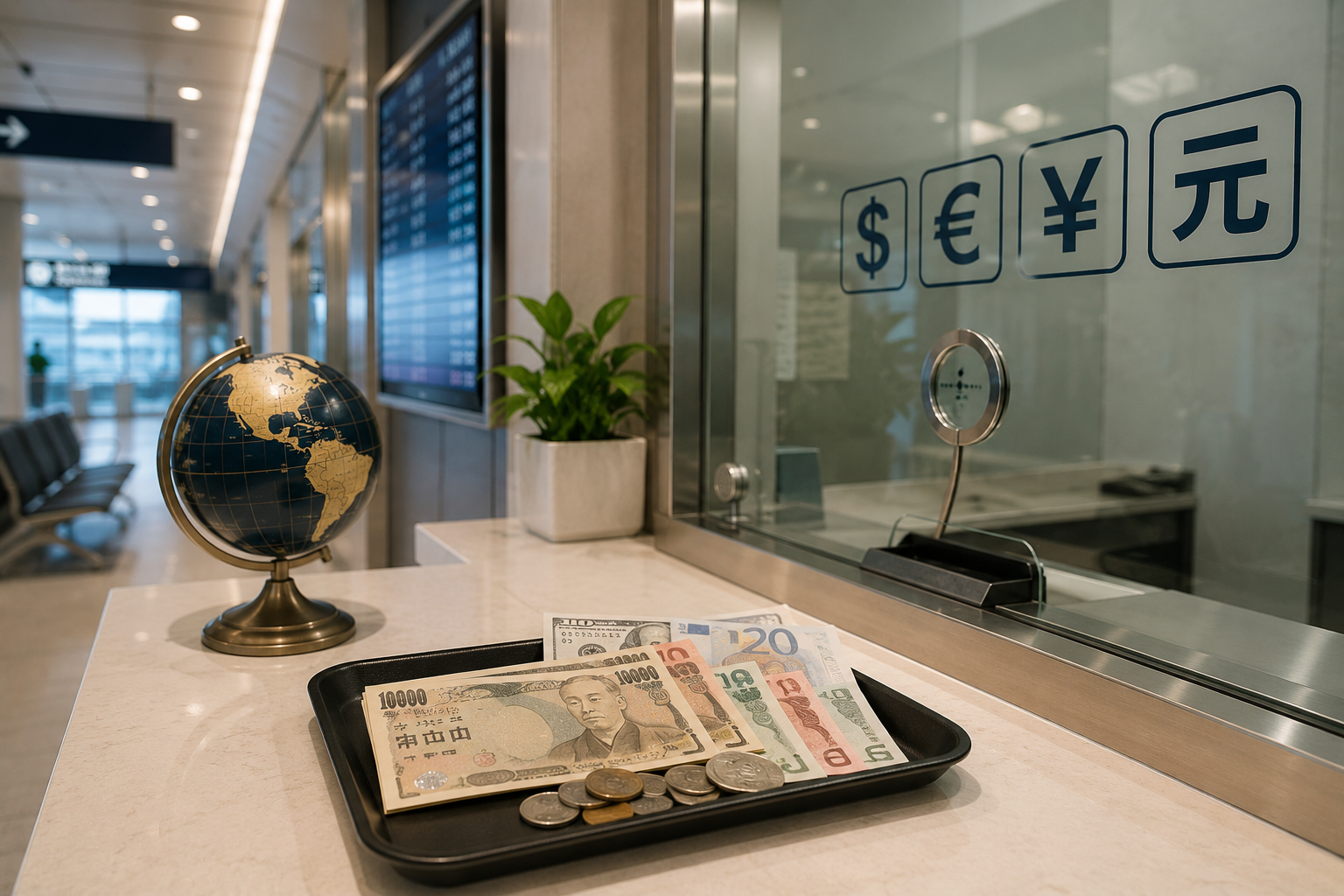
Both Narita Airport and Haneda Airport have currency exchange counters.
This is a convenient option if you’d like some Japanese yen immediately after arriving.
However, airport exchange rates are often less favorable than withdrawing cash from an ATM.
Tip
Exchange only a small amount at the airport for transportation or your first meal, then withdraw more cash later if needed.
3. Exchange Money in the City
Currency exchange shops can be found in many popular tourist areas, including:
- Shinjuku
- Shibuya
- Ginza
- Ueno
Some city exchange shops offer competitive rates, so it’s worth comparing rates before exchanging a large amount of money.
How Much Cash Should You Carry?
The amount depends on your travel style, but here’s a general guide.
| Length of Stay | Recommended Cash |
|---|---|
| 3–5 Days | ¥10,000–20,000 |
| 1 Week | ¥20,000–40,000 |
| 2 Weeks or More | Based on your itinerary |
Since ATMs are easy to find, there’s usually no need to carry a large amount of cash.
Can I Use Credit Cards in Japan?
Yes.
Credit cards are widely accepted at:
- Hotels
- Department stores
- Convenience stores
- Major restaurant chains
- Shopping malls
- Most tourist attractions
- Many train stations
However, some places still prefer cash, including:
- Small local restaurants
- Traditional cafés
- Street food stalls
- Temples and shrines
- Some local markets
- Rural areas
It’s always a good idea to keep some cash with you.
Should I Exchange Money Before Coming to Japan?
Not necessarily.
Most visitors find it easier and cheaper to withdraw Japanese yen after arriving in Japan.
International ATMs are easy to find, and exchange rates are often better than those offered by currency exchange services in your home country.
I rarely carry a lot of cash because credit cards and mobile payments are accepted almost everywhere.
That said, I always keep around ¥10,000 in cash in my wallet just in case. Small restaurants, temples, local shops, ticket machines, and some older businesses still accept cash only.
If you’re visiting Japan for the first time, I’d recommend carrying both a credit card and around ¥10,000–20,000 in cash while sightseeing. In most cases, that’s enough for a full day without carrying more cash than necessary.
Final Thoughts
For most travelers, withdrawing Japanese yen from a 7-Eleven ATM is the easiest and most economical option.
There’s no need to exchange a large amount of money before your trip. Instead, carry a combination of cash and credit cards so you’ll be prepared wherever your travels take you.
With a little planning, paying for things in Japan is simple, convenient, and stress-free.