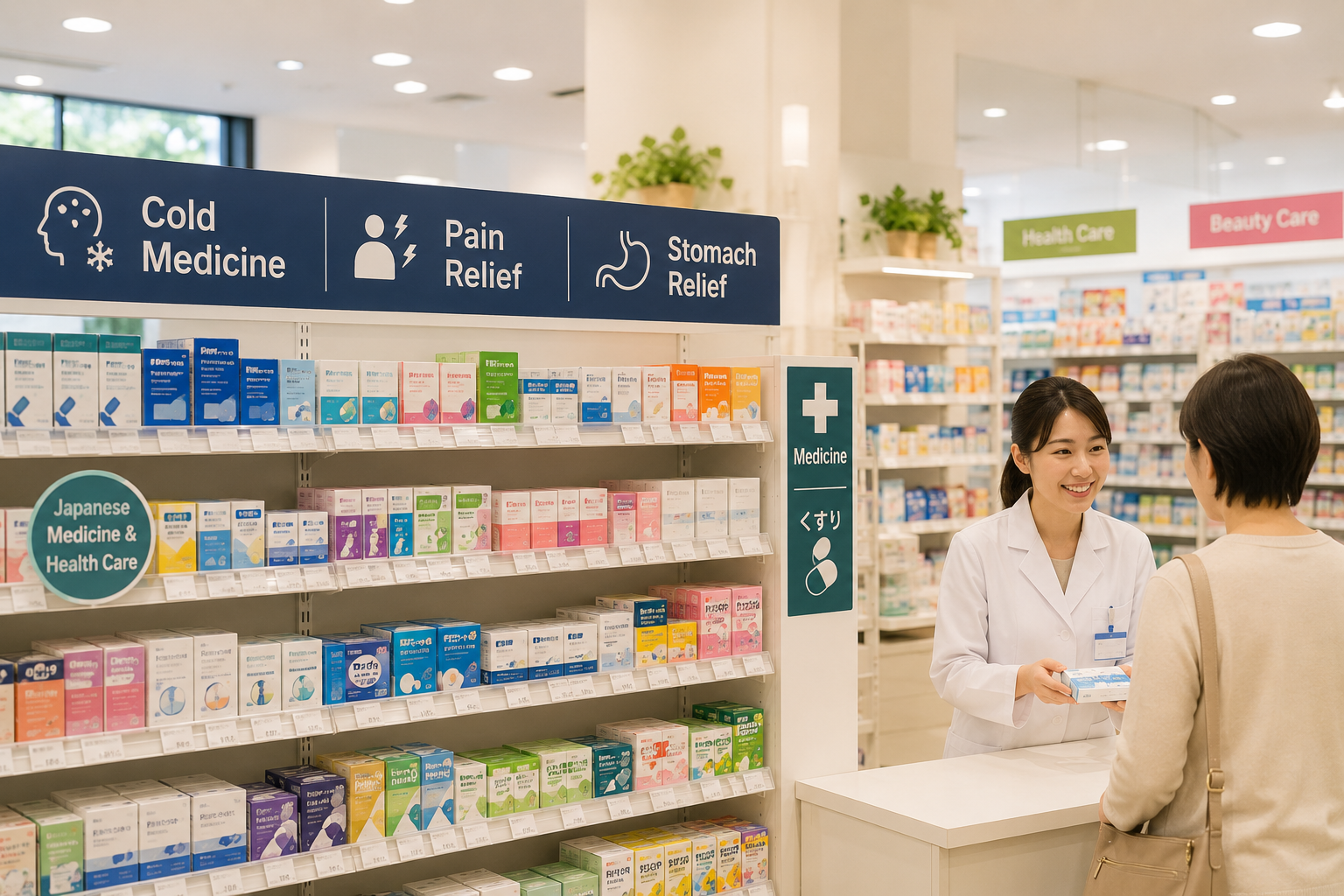
Feeling unwell while traveling can be stressful, especially when medicine labels are written mainly in Japanese. Fortunately, Japan has many pharmacies and drugstores where travelers can buy medicine for common problems such as headaches, colds, stomach discomfort, allergies, and minor injuries.
Where Can You Buy Medicine?
You can buy over-the-counter medicine at:
- Drugstores
- Pharmacies
- Some large supermarkets
- Selected convenience stores
Large drugstore chains are common around major train stations and shopping areas. Many city branches have tax-free counters, multilingual signs, or translation devices.
A store displaying the Japanese characters 薬 usually sells medicine.
Drugstore or Pharmacy?
In Japan, drugstores sell over-the-counter medicine along with cosmetics, toiletries, snacks, and household products.
A pharmacy marked 調剤薬局 mainly prepares prescription medicine. You will need a prescription from a doctor in Japan to receive prescription-only medication.
Some stores offer both services, but the prescription counter may have shorter opening hours than the main shop.
Common Medicine Available in Japan
Japanese drugstores usually carry medicine for:
- Headaches and fever
- Cold symptoms
- Coughs and sore throats
- Stomach pain and indigestion
- Diarrhea and constipation
- Motion sickness
- Hay fever and allergies
- Insect bites
- Minor cuts and burns
- Muscle pain
- Eye discomfort
The ingredients and dosage may be different from products sold in your home country, even when the packaging appears similar.
How to Ask for Medicine
Do not choose medicine based only on the package design. Ask a pharmacist or qualified member of staff for help whenever possible.
Explain:
- Your symptoms
- Your age
- How long you have felt unwell
- Any allergies
- Other medicine you are taking
- Whether you are pregnant or breastfeeding
- Any medical conditions you have
Using a translation app can make the conversation much easier. You can also show the staff a photo of medicine you normally use, but do not assume the Japanese product contains the same ingredients.
Useful phrases include:
I have a headache.
Atama ga itai desu.
I have a stomachache.
Onaka ga itai desu.
I have a fever.
Netsu ga arimasu.
Do you have an English explanation?
Eigo no setsumei wa arimasu ka?
How to Read the Dosage
Always check:
- How many tablets to take
- How often to take them
- Whether to take them before or after eating
- The minimum age
- Warnings and possible side effects
If the instructions are only in Japanese, ask the pharmacist to write down the dosage or use your phone’s camera translation feature.
Never take more than the recommended amount.
Medicine for Children
Children’s medicine is usually separated by age, and some products are not suitable for young children.
Tell the pharmacist the child’s exact age and weight. Do not give children adult medicine unless a medical professional specifically tells you to do so.
Can You Use a Foreign Prescription?
A prescription issued overseas generally cannot be filled directly at a Japanese pharmacy. You may need to visit a clinic or hospital in Japan and receive a new prescription from a Japanese doctor.
Bring information about your medication, including:
- The generic ingredient name
- The dosage
- The reason you take it
- A copy of your prescription
- A letter from your doctor, if available
Brand names may be different or unavailable in Japan.
Bringing Your Own Medicine to Japan
Japan has rules concerning the importation of medicine for personal use. Some controlled medicines require permission in advance, and certain products may not be permitted even when legally prescribed in another country. Check the latest requirements before traveling, especially for stimulants, narcotics, psychotropic medicines, and other controlled substances.
Travelers who need an import confirmation can apply through the Ministry of Health, Labour and Welfare’s online system when required.
When Should You See a Doctor?
Over-the-counter medicine is intended for mild, temporary symptoms. Visit a clinic or hospital if:
- Your symptoms are severe
- You have difficulty breathing
- You experience a serious allergic reaction
- You have a very high or persistent fever
- You have severe or worsening pain
- Your symptoms do not improve
- You are unsure which medicine is safe
Call 119 for an ambulance in a medical emergency.
English-Speaking Clinic at Tokyo Station
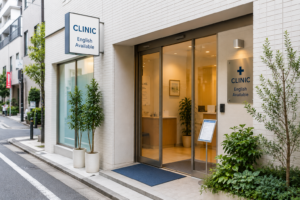
If you need to see a doctor while staying in Tokyo, Tokyo Station International Clinic is a convenient option for international visitors. It is located inside the Tokyo Station complex, near the Yaesu South Exit, and provides support in English and Chinese.
The clinic treats both adults and children and offers general internal medicine, surgery, dermatology, and pediatric care. It is open every day from 9:00 a.m. to 9:00 p.m., including weekends and public holidays. The final reception is generally at 8:30 p.m., although hours may change during major holiday periods.
Appointments can be booked online, but same-day walk-in consultations are also available. The clinic accepts cash, credit cards, electronic money, and Suica.
Tokyo Station International Clinic
Location: GranRoof 1-M2F, near the Yaesu South Exit of JR Tokyo Station
Opening hours: 9:00 a.m.–9:00 p.m. daily
Telephone: 03-6206-3070
Languages: Japanese, English, and Chinese
Take a photo of the medicine package and dosage instructions before opening it. This makes it easier to check what you took and show the information to a doctor or pharmacist later.
When possible, visit a larger drugstore near a major station during the daytime. These branches are more likely to have a pharmacist available and may offer multilingual support. Avoid combining several cold, pain, or allergy medicines without checking the ingredients, as different products may contain overlapping substances.