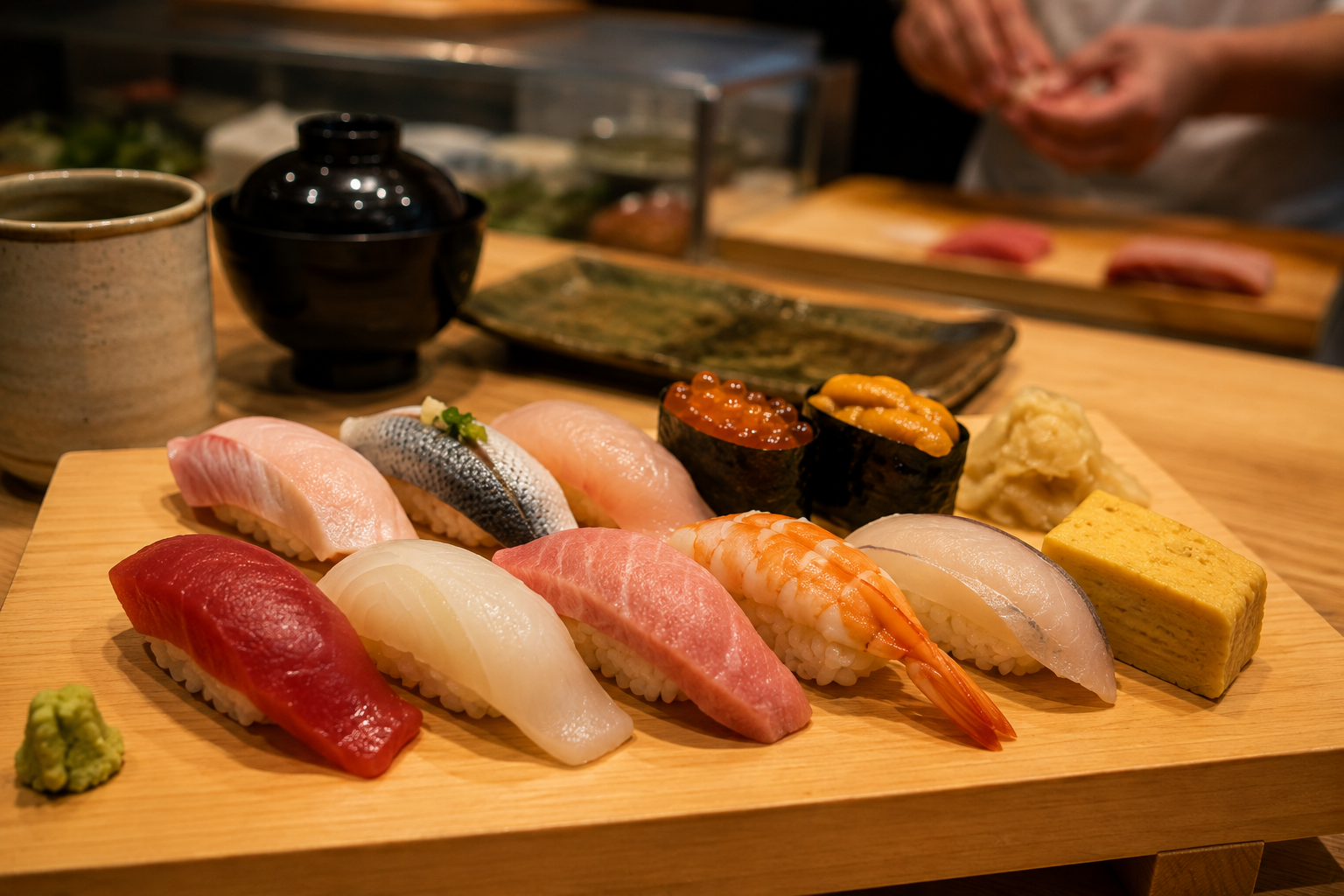
Sushi is one of the most iconic foods to try in Japan, and Tokyo offers everything from affordable casual restaurants to refined omakase experiences prepared by highly skilled chefs.
You do not need to spend a fortune to enjoy good sushi in Tokyo. Casual sushi chains are convenient and affordable, while mid-range restaurants offer higher-quality seafood without the price of a luxury sushi counter.
This guide introduces some of the best sushi restaurants in Tokyo for different budgets.
Types of Sushi You Should Know
Before choosing a restaurant, it helps to understand some of the most common types of sushi you will find in Tokyo.
Nigiri – A slice of fish or seafood served over a small portion of vinegared rice.
Maki – Sushi rice and fillings rolled in seaweed and cut into pieces.
Gunkan – Rice wrapped with a strip of seaweed and topped with ingredients such as salmon roe or sea urchin.
Temaki – A cone-shaped hand roll filled with rice, seafood, and vegetables.
Kaiten Sushi – Casual sushi served on a rotating lane or delivered directly to your seat after ordering.
Omakase – A set meal selected and prepared by the chef using seasonal ingredients.
Budget-Friendly Sushi Restaurants
Affordable sushi restaurants are a great choice for families, solo travelers, and anyone who wants to try several different types of sushi without spending too much.
Sushiro
- Large selection of affordable sushi
- Touchscreen ordering system
- Side dishes and desserts available
Price Range: Approximately ¥1,500–3,000 per person
Sushiro is one of Japan’s largest sushi chains. Most dishes can be ordered using a touchscreen, and many restaurants offer English-language menus.
In addition to traditional nigiri and rolls, you will usually find ramen, fried food, desserts, and child-friendly dishes. This makes Sushiro an easy option for families and groups with different tastes.
Kura Sushi
- Affordable sushi plates
- Touchscreen ordering
- Popular with families
Price Range: Approximately ¥1,500–3,000 per person
Kura Sushi combines inexpensive sushi with a casual and entertaining dining experience. Orders are placed using a touchscreen and delivered directly to the table.
Empty plates can be placed into a collection slot, and some restaurants offer a small game after a certain number of plates have been returned. This can make the experience especially enjoyable for children.
Uobei
- Sushi delivered on a high-speed lane
- Easy touchscreen ordering
- Quick and casual atmosphere
Price Range: Approximately ¥1,500–3,000 per person
Uobei is known for delivering each order directly to your seat on a high-speed lane rather than displaying sushi continuously.
The ordering process is simple, and English menus are usually available. It is a convenient option when you want a quick and affordable sushi meal.
Hama Sushi
- Wide selection of inexpensive sushi
- Easy ordering system
- Cooked dishes available
Price Range: Approximately ¥1,500–3,000 per person
Hama Sushi is another popular chain with a large menu of affordable sushi.
Alongside raw fish, you can usually find cooked seafood, meat-topped sushi, noodles, fried dishes, and desserts. The variety makes it a practical choice for visitors who are new to sushi or are traveling with someone who does not eat raw fish.
Mid-Range Sushi Restaurants
Mid-range restaurants are ideal when you want fresher seafood and more carefully prepared sushi without committing to an expensive luxury omakase course.
Sushi no Midori
- Generous portions of seafood
- Excellent value for the quality
- Large selection of nigiri and sushi sets
Price Range: Approximately ¥3,000–6,000 per person
Sushi no Midori is well known for serving high-quality sushi with generous toppings at reasonable prices.
It is extremely popular, so queues can be long during lunch, dinner, and weekends. Some locations use a numbered ticket system, allowing you to check your place in the queue while you wait.
Nemuro Hanamaru
- Seafood inspired by Hokkaido
- Seasonal fish and shellfish
- Casual but high-quality sushi
Price Range: Approximately ¥3,000–6,000 per person
Nemuro Hanamaru is known for seafood from Hokkaido and offers a step up from standard budget sushi chains.
The menu often includes seasonal varieties of fish and shellfish that may be unfamiliar to international visitors. It is a good place to try something beyond salmon and tuna while keeping the experience relaxed and accessible.
Kaiten Sushi Ginza Onodera
- Edomae-style sushi
- Skilled chefs preparing sushi
- Premium but casual experience
Price Range: Approximately ¥5,000–10,000 per person
Kaiten Sushi Ginza Onodera offers carefully prepared Edomae-style sushi in a more casual setting than the group’s high-end sushi counters.
Although it is more expensive than a typical casual sushi chain, it provides an opportunity to experience refined sushi techniques without paying for a full luxury omakase course.
Sushi Tokyo Ten
- Omakase-style menu
- Seasonal sushi and small dishes
- Modern and approachable atmosphere
Price Range: Approximately ¥8,000–15,000 per person
Sushi Tokyo Ten serves an omakase menu featuring a sequence of nigiri, seafood, and small Japanese dishes selected by the chef.
The experience is more formal than casual sushi but remains approachable for travelers who want to try omakase without choosing one of Tokyo’s most expensive restaurants.
Reservations are strongly recommended.
High-End Sushi Restaurants
High-end sushi restaurants usually serve omakase courses at a small counter. The chef chooses the menu based on the best seasonal ingredients available that day.
Reservations are often essential, and some restaurants may require advance payment or have strict cancellation policies.
Sushi Ginza Onodera
- Traditional Edomae sushi
- Seasonal premium ingredients
- Refined omakase experience
Price Range: From approximately ¥20,000 per person
Sushi Ginza Onodera is known for serving carefully crafted Edomae sushi using techniques such as marinating, curing, simmering, and aging seafood to enhance its flavor.
Guests are seated at an intimate counter where each piece is prepared and served individually. It is a memorable choice for a special occasion or an introduction to high-end sushi.
Ginza Kyubey
- Long-established sushi restaurant
- Traditional counter service
- Lunch and dinner courses available
Price Range: Approximately ¥20,000–40,000 per person
Ginza Kyubey is one of Tokyo’s best-known traditional sushi restaurants and has welcomed guests for generations.
The atmosphere is elegant but generally more approachable than some exclusive sushi counters. Lunch can be a practical way to experience high-quality sushi at a lower price than dinner.
Sushi Kanesaka
- Refined Edomae sushi
- Intimate counter seating
- Strong focus on seasonality
Price Range: Approximately ¥30,000–50,000 per person
Sushi Kanesaka offers a traditional omakase experience centered on seasonal seafood and carefully prepared sushi rice.
Each piece is served at the ideal temperature and timing, making the meal feel more like a carefully planned culinary experience than an ordinary restaurant visit.
Sukiyabashi Jiro
- One of Japan’s most famous sushi restaurants
- Traditional omakase menu
- Extremely limited reservations
Price Range: From approximately ¥50,000 per person
Sukiyabashi Jiro became internationally famous through the documentary Jiro Dreams of Sushi.
However, reservations are extremely difficult to obtain and may not be available directly to the general public. Travelers should not plan their trip around dining here unless a reservation has already been confirmed.
What to Expect at a Sushi Restaurant
At casual sushi restaurants, you can usually order individual plates using a touchscreen. Plate colors may indicate different prices, and the final bill is calculated by counting the plates or using an automated plate-counting system.
At traditional sushi counters, the chef may place each piece directly in front of you. It is usually best to eat the sushi soon after it is served.
Nigiri can be eaten with either chopsticks or your fingers. When using soy sauce, try to dip the fish rather than the rice so the sushi does not fall apart or absorb too much sauce.
Pickled ginger is intended to refresh your palate between different types of sushi rather than being placed on top of each piece.
Can You Eat Sushi Without Raw Fish?
Yes. Sushi restaurants usually offer several cooked options, although the selection varies.
Common choices include:
- Cooked shrimp
- Grilled salmon
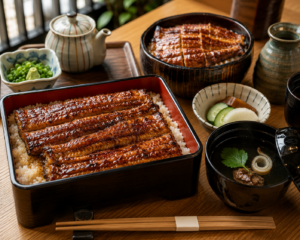
- Eel
- Egg omelet
- Inari sushi
- Cucumber rolls
- Tuna mayonnaise
- Corn mayonnaise
- Meat-topped sushi
Large sushi chains generally offer the widest variety of cooked dishes, side dishes, and child-friendly choices.
Vegetarian travelers should be aware that sauces, soup stocks, and cooked dishes may contain fish-based ingredients even when seafood is not visible.
Popular sushi restaurants can become extremely busy during lunch and dinner, especially on weekends. Visiting shortly after opening or between the main meal periods may help reduce your waiting time.
For casual sushi, there is usually no need to choose a restaurant based on one specific location. Large chains have branches throughout Tokyo, so check which one fits naturally into your sightseeing schedule.
At high-end sushi restaurants, arrive on time and avoid wearing strong perfume, as the scent can interfere with the delicate flavors of the food. Cancellation charges can be strict, so check the restaurant’s policy carefully before reserving.
Prices vary depending on how much you order, the menu selected, and whether you visit for lunch or dinner. Opening hours, menus, prices, and reservation policies can also change, so confirm the latest information before your visit.