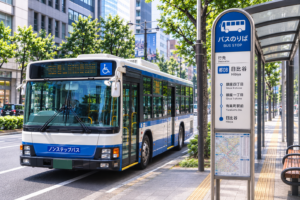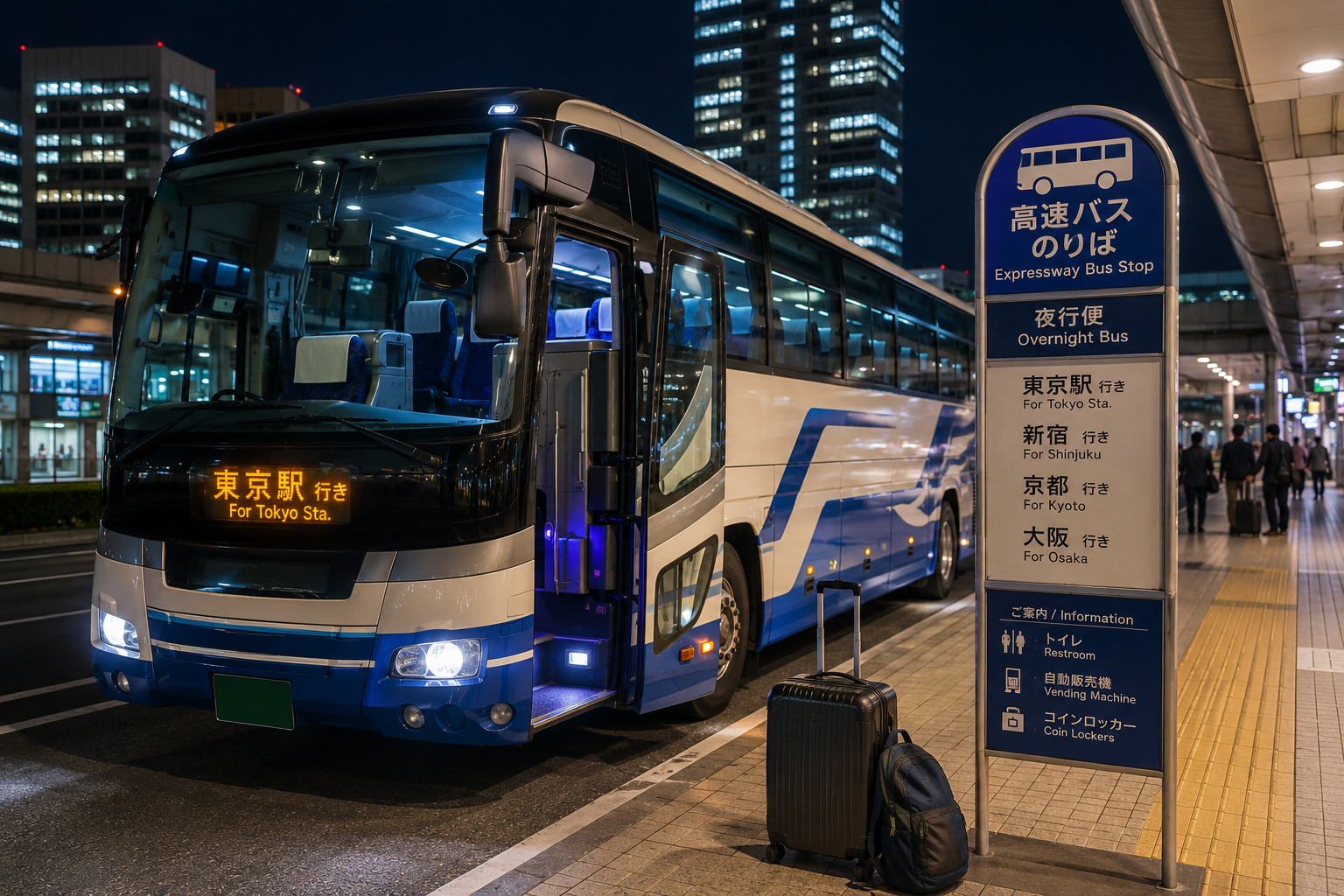
Overnight buses, often called night buses or highway buses, are a budget-friendly way to travel long distances in Japan.
Instead of paying for a hotel and transportation separately, you travel while you sleep and arrive at your destination the following morning.
Night buses connect Tokyo with many popular destinations, including Osaka, Kyoto, Nagoya, Sendai, and other cities across Japan.
They are usually cheaper than the Shinkansen, but the experience is very different. Here’s what you should know before booking one.
What Is an Overnight Bus in Japan?
An overnight bus is a long-distance highway bus that usually departs in the evening and arrives the following morning.
Depending on the route, the journey may take around 6–12 hours or longer.
Buses usually make several rest stops along the way, although passengers may be asked to remain on board at certain stops.
Where Can You Book Overnight Buses?
Tickets can usually be booked online through highway bus companies and reservation websites.
Some routes can also be booked at bus terminals or ticket counters.
Popular operators and booking services include:
・WILLER EXPRESS
・JR Highway Bus
・Highwaybus.com
If you are traveling between Tokyo and Osaka, there are several overnight bus options available.
For a standard night bus, Klook offers services departing from Tokyo, Shinjuku, and the Tokyo Disney area for Osaka.
Check current availability and book now!
For travelers looking for a more comfortable journey, a luxury night bus option is also available between Tokyo, Kyoto, and Osaka, offering a more spacious and premium travel experience.
Check current availability and book now!
For popular routes, weekends, holidays, and peak travel periods, booking in advance is recommended.
Where Do Overnight Buses Leave From?
Night buses usually depart from major bus terminals or designated bus stops.
In Tokyo, common departure areas include:
・Shinjuku
・Tokyo Station
・Shibuya
・Ikebukuro
Be sure to check the exact boarding location before you travel.
Large stations such as Shinjuku and Tokyo Station have multiple exits and bus boarding areas, and some buses depart from locations that are a short walk from the station.
How Early Should You Arrive?
Try to arrive at least 15–30 minutes before departure.
Unlike trains, overnight buses will not wait if you are late.
Give yourself extra time if you are unfamiliar with the station or bus terminal.
What Are the Seats Like?
Seat layouts vary considerably depending on the bus and price.
Budget buses may have four seats across, similar to a standard coach.
More comfortable options may offer three separate seats across with additional personal space.
Depending on the bus, you may also find:
・Reclining seats
・Leg rests or footrests
・Privacy curtains
・Charging outlets or USB ports
・Wi-Fi
・Blankets
・Individual reading lights
Premium buses can be surprisingly comfortable, but they are usually more expensive.
Always check the seat configuration and amenities when booking.
Can You Bring Luggage?
Yes, most overnight buses have luggage storage underneath the bus for larger suitcases.
Small bags and valuables should normally be kept with you inside the bus.
Luggage size and quantity restrictions vary by operator, so check the rules before departure if you are traveling with large or multiple suitcases.
Keep your passport, wallet, phone, medication, and other valuables with you rather than placing them in the luggage compartment.
Are There Toilets on Overnight Buses?
Some overnight buses have toilets, but not all of them do.
Buses without toilets generally make scheduled stops at highway rest areas during the journey.
If having a toilet on board is important to you, check the bus facilities before booking.
What Happens at Rest Stops?
Many overnight buses stop at highway service areas during the night.
Depending on the stop, you may be able to use the restroom, buy drinks, or visit a convenience store or vending machine.
Pay close attention to the departure time announced by the driver.
Also remember your bus number and parking location. Large service areas can have several similar-looking buses parked at the same time.
Can You Eat on an Overnight Bus?
Rules vary by bus company.
Small snacks and drinks may be acceptable, but strong-smelling foods can disturb other passengers in the enclosed space.
It is usually better to eat your main meal before boarding.
Keep noise to a minimum, particularly after the cabin lights are turned off.
Can You Sleep Comfortably?
That depends on the person and the type of seat you book.
Some travelers sleep easily on buses, while others may find it difficult even with a reclining seat.
If sleep is important, paying slightly more for a three-seat configuration or premium seat can make a significant difference.
An eye mask, neck pillow, and earplugs can also be useful.
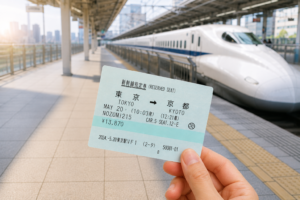
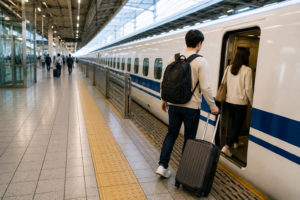
Overnight Bus vs Shinkansen
The biggest advantage of an overnight bus is usually the price.
It can also save you the cost of one night’s accommodation because you travel while sleeping.
The Shinkansen, however, is much faster and generally more comfortable.
For example, traveling between Tokyo and Kyoto takes only a few hours by Shinkansen, while an overnight bus takes most of the night.
If your priority is saving time, choose the Shinkansen. If your priority is keeping travel costs low, an overnight bus may be worth considering.
Are Overnight Buses Safe in Japan?
Highway buses are widely used in Japan and operate under Japanese transportation regulations.
As with any overnight transportation, keep valuables such as your passport, wallet, and phone close to you.
Solo travelers can also look for buses with women-only seating areas or other seating options depending on the operator.
Who Should Consider an Overnight Bus?
An overnight bus may be a good choice if:
・You are traveling on a budget.
・You don’t mind sleeping in a reclining seat.
・You want to save the cost of a hotel for one night.
・You are traveling between major Japanese cities.
・You have enough flexibility the following morning.
It may not be the best option if you need a good night’s sleep, are traveling with very young children, or have a packed schedule immediately after arrival.
Don’t choose an overnight bus based on price alone. Check the seat layout before booking.
A three-seat bus with individual seats and more personal space can be much more comfortable than the cheapest four-seat option, especially on a long journey.
Also, check where the bus arrives in the morning. Some buses arrive very early, before hotels allow check-in and before many shops or attractions are open.
If that happens, look for coin lockers or luggage storage near the arrival station so you don’t have to carry your suitcase around until check-in.
Related Guides
・How to Use Buses in Japan
・How to Use the Shinkansen
・How to Buy Shinkansen Tickets
・How to Use Coin Lockers in Japan
・Best Transportation Apps for Japan
・How to Use IC Cards in Japan