Tokyo’s train and subway network is usually the easiest way to get around, but buses can be very useful for places that are not directly connected by train.
For first-time visitors, Tokyo buses may look a little confusing at first, but once you understand where to board, how to pay, and when to get off, they are quite easy to use.
When Are Buses Useful in Tokyo?
Buses can be especially convenient when:
- Your destination is far from the nearest train station
- You are traveling between nearby neighborhoods
- You want to avoid several train transfers
- You are visiting areas such as Asakusa, Odaiba, or residential neighborhoods
- You are traveling with children or luggage and prefer fewer transfers
For longer journeys across Tokyo, trains and subways are usually faster.
How to Find the Right Bus
Google Maps is one of the easiest ways to find bus routes in Tokyo.
Enter your destination and check:
- Bus number or route
- Bus stop name
- Departure time
- Where to board
- Where to get off
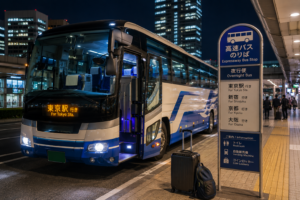
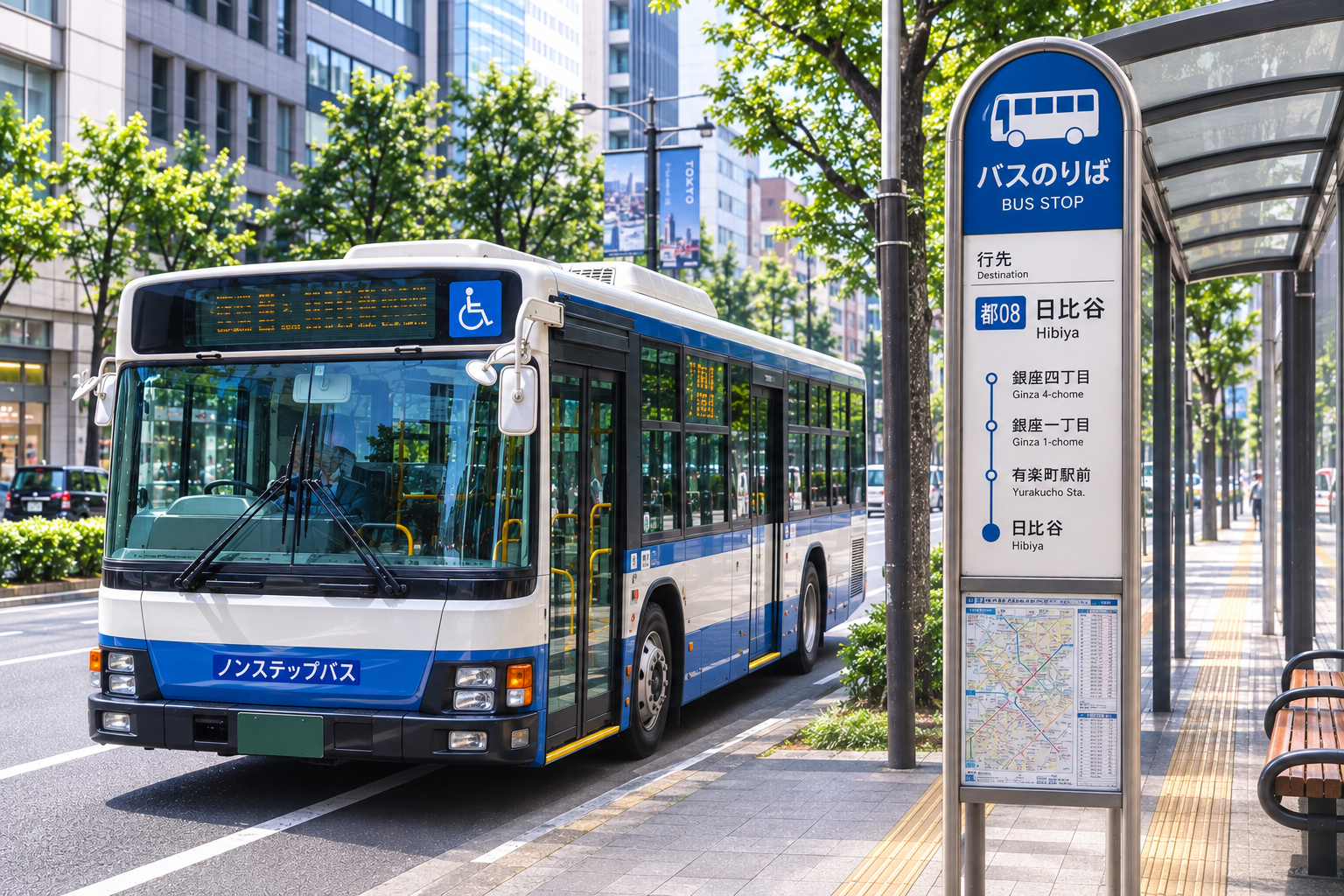
Bus stops usually display route numbers and destination information. In major tourist areas, English information is often available.
How to Board a Bus in Tokyo
The boarding system can vary depending on the bus company, but on many buses in central Tokyo, including Toei buses, passengers board from the front.
Before getting on, check the destination shown on the front or side of the bus to make sure it is the correct one.
If you are unsure, showing the driver the destination on your phone can help.
How to Pay for a Bus in Tokyo
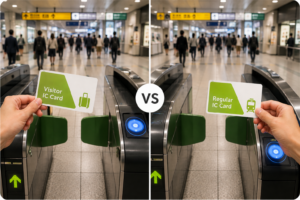
Using an IC card such as Suica or PASMO is usually the easiest option.
When boarding, tap your IC card on the card reader.
Cash is also accepted on many buses, but using an IC card is much simpler because you do not need to prepare the exact fare.
Make sure your IC card has enough balance before boarding.
How to Know When to Get Off
The next bus stop is usually displayed on a screen inside the bus, and many buses also provide announcements.
Google Maps can also help you follow your location during the journey.
When your stop is approaching, press one of the stop buttons located throughout the bus.
The button lets the driver know that someone wants to get off at the next stop.
Getting Off the Bus
On many central Tokyo buses, passengers exit through the rear or middle door.
However, boarding and exit procedures can vary between bus operators, so follow the signs and what other passengers are doing.
Do not wait until the last second to move toward the exit, especially if the bus is crowded.
Can You Use Suica or PASMO on Tokyo Buses?
Yes, Suica and PASMO can be used on many buses throughout Tokyo.
For visitors, this is generally much easier than paying with cash.
The same IC card you use for trains and subways can therefore also be useful when taking buses around the city.
Are Tokyo Buses Easy for Tourists?
Yes, especially if you use Google Maps together with an IC card.
You do not need to understand the entire Tokyo bus network. Simply search for the route you need, confirm the bus number and destination, and follow your location while riding.
After using a Tokyo bus once or twice, the system becomes much easier to understand.
For your first bus ride in Tokyo, try using a route where you already know the destination area. It makes the experience much less stressful while you get used to reading the bus stop information and watching for your stop.
Keep Google Maps open during the ride so you can see when you are getting close to your destination.
And if the bus is extremely crowded or the route requires several transfers, taking the train or subway may still be the easier option in Tokyo.