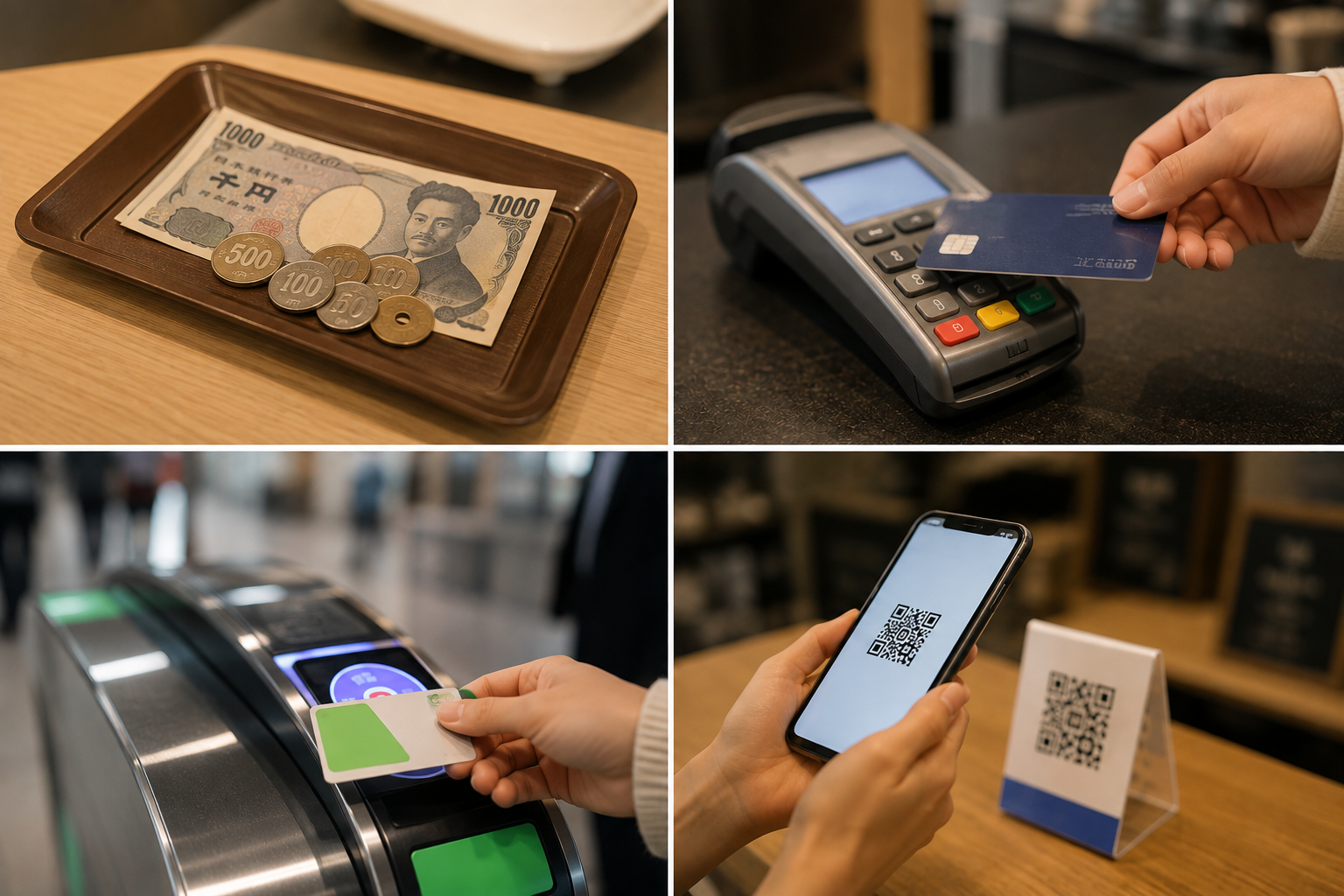
Paying for things in Japan is easier than ever. While Japan was once known as a cash-based country, credit cards, IC cards, and mobile payments are now widely accepted in many places.
However, it’s still a good idea to carry some cash, especially when visiting smaller shops or rural areas.
Cash
Cash is still commonly used in Japan.
You may need cash at:
- Small local restaurants
- Temples and shrines
- Street food stalls
- Small souvenir shops
- Some rural areas
ATMs are easy to find at convenience stores such as 7-Eleven, FamilyMart, and Lawson.
Credit Cards
Major credit cards are widely accepted.
Most stores accept:
- Visa
- Mastercard
- American Express
- JCB
You’ll often be asked to insert or tap your card, and many transactions require your PIN.
IC Cards
IC cards are one of the most convenient ways to make small purchases.
Popular cards include:
- Welcome Suica
- Suica
- PASMO
In addition to trains and buses, you can use them at:
- Convenience stores
- Vending machines
- Drugstores
- Coin lockers
- Some restaurants and cafés
Simply tap your card to pay.
Mobile Payments
Many stores also accept mobile payments such as:
- Apple Pay
- Google Pay
If you’ve added a Suica or another supported IC card to your phone, you can simply tap your device instead of using a physical card.
Do I Need Cash?
Yes—but not a lot.
For most travelers, carrying around ¥10,000–¥20,000 in cash is usually enough for everyday expenses. You can always withdraw more if needed.
Useful Payment Tips
- Keep some ¥100 coins for vending machines and coin lockers.
- Many ticket machines now accept credit cards, but some still require cash.
- Large department stores and shopping malls almost always accept cards.
- Small family-run restaurants may only accept cash.
Before entering a small restaurant, take a quick look near the entrance or cashier. Many shops display stickers showing which payment methods they accept, such as credit cards, IC cards, or cash only. Checking first can save you an awkward surprise when it’s time to pay.