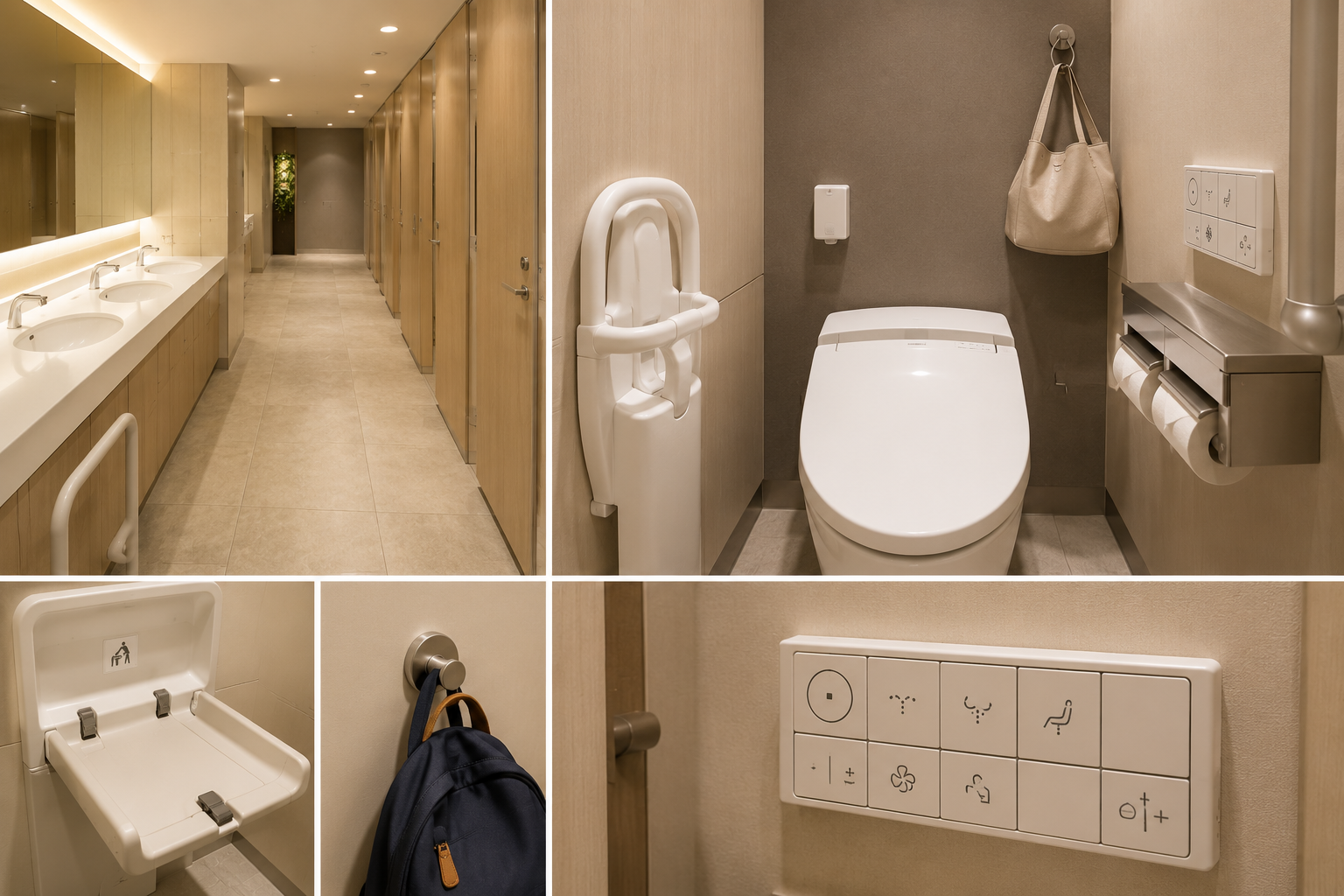
Japanese toilets are famous around the world for being clean, modern, and packed with features. If it’s your first time visiting Japan, the buttons may look confusing at first, but they’re actually very easy to use.
Here’s a simple guide to help you feel comfortable using Japanese toilets during your trip.
What Types of Toilets Will You Find?
There are two main types of toilets in Japan:
Western-Style Toilets
These are the most common toilets in hotels, shopping malls, restaurants, train stations, airports, and tourist attractions.
Many include electronic bidet functions (often called a “Washlet”).
Japanese Squat Toilets
Although less common today, you may still find squat toilets in older train stations, public parks, or traditional buildings.
If both styles are available, simply choose the Western-style toilet.
Understanding the Buttons
The control panel may look different depending on the manufacturer, but the functions are generally similar.
Common buttons include:
- Rear – Cleans the back.
- Front / Bidet – Designed for feminine hygiene.
- Stop – Stops all functions immediately.
- Water Pressure (+ / −) – Adjusts the spray strength.
- Position – Moves the spray nozzle forward or backward.
- Dry – Warm air drying (available on some models).
- Seat Heating – Adjusts the seat temperature.
Most newer toilets also include English labels or symbols.
What Is the Sound Button?
Some toilets have a button that plays the sound of running water.
This feature is designed to provide privacy by masking bathroom sounds without wasting water.
It is commonly called the Sound Princess (Otohime).
How Do You Flush?
Flushing methods vary depending on the toilet.
Common options include:
- Flush button on the wall
- Flush button on the control panel
- Lever beside the toilet
- Sensor-operated automatic flushing
If the toilet doesn’t flush automatically after you stand up, simply look for a flush button or lever nearby.
Can You Flush Toilet Paper?
Yes.
Japanese toilet paper is designed to dissolve quickly in water.
Only flush:
- Toilet paper
- Human waste
Do not flush:
- Wet wipes
- Baby wipes
- Paper towels
- Tissues
- Sanitary products
- Diapers
These items should be placed in the trash bin if one is provided.
What About Toilet Seats?
Many toilet seats are heated during colder months.
This is completely normal and one of the small comforts many visitors enjoy during winter.
Are Public Toilets Clean?
In general, yes.
Japan is well known for maintaining clean public restrooms.
You can usually find free public toilets at:
- Train stations
- Shopping malls
- Department stores
- Parks
- Tourist attractions
- Convenience stores (customer use varies by location)
Do I Need to Pay?
Almost all public toilets in Japan are free to use.
What If There Isn’t Toilet Paper?
This is uncommon, but it can occasionally happen in small parks or remote public toilets.
Keeping a small packet of tissues in your bag is always a good idea.
Toilet Slippers
In some traditional restaurants, temples, ryokan, or older buildings, you may find special slippers for use inside the restroom.
Remember to change back into your regular shoes after leaving the toilet.
Accessible and Family Toilets
Many larger facilities provide accessible toilets that are suitable for:
- Wheelchair users
- Parents with strollers
- Families with young children
These restrooms often include:
- Baby-changing tables
- Child seats
- Extra space for luggage
- Handrails
Please leave them available for those who need them most.
If you’re unsure which button to press, don’t worry—simply look for the large STOP button. It’s usually easy to recognize, even if everything else is in Japanese.
Also, don’t be surprised if you hear running water when someone is using the next toilet. In many cases, it’s just the privacy sound feature and not actual water being wasted.