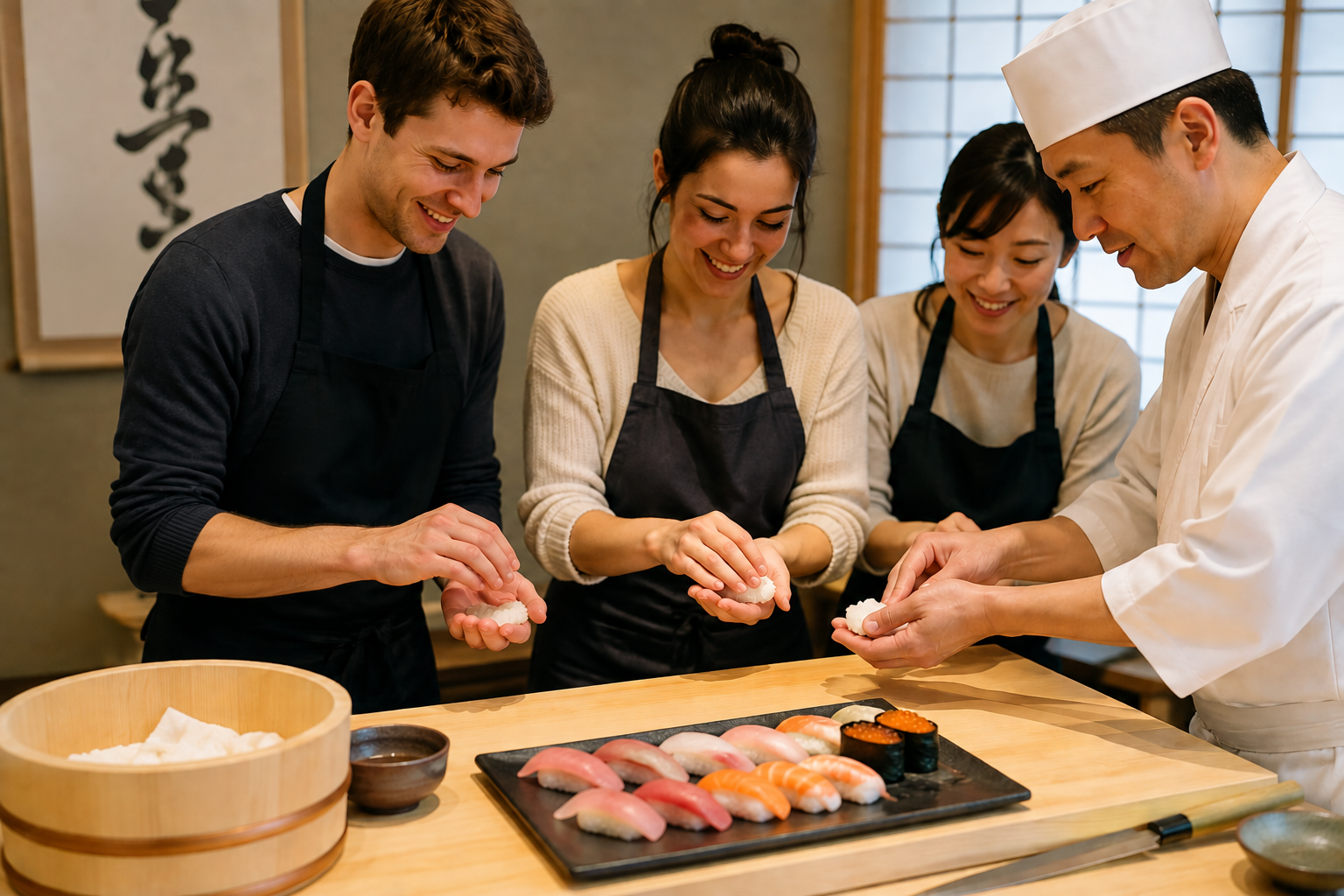
Eating sushi in Tokyo is a must, but learning how to make it yourself can be even more memorable.
Sushi-making classes in Tokyo are designed for beginners, and many are available in English. You can learn basic techniques, make several types of sushi, and then enjoy everything you’ve prepared.
Here are the main types of sushi-making experiences to choose from.
Tsukiji Market & Sushi-Making Experience
Best for: Food lovers and travelers who want to explore Tsukiji
This experience combines a guided walk through Tsukiji Outer Market with a hands-on sushi-making class.
You’ll explore the market with a local guide, visiting hidden spots and specialty shops while learning about Japanese seafood, ingredients, and food culture.
After exploring the market, you’ll make 10 pieces of sushi using fresh ingredients from Tsukiji, including tuna, salmon, and seasonal ingredients.
You’ll use authentic Japanese tools and learn how to shape and prepare your sushi before enjoying what you’ve made.
The entire experience takes around two hours, making it easy to fit into a day of sightseeing in Tokyo.
Check current availability and book now!
Traditional Sushi-Making Classes
Best for: First-time visitors and beginners
A traditional sushi-making class is the easiest choice if you’ve never made sushi before.
An instructor will usually teach you how to prepare and shape sushi rice, handle ingredients, and make several types of sushi.
Depending on the class, you may make:
- Nigiri sushi
- Maki rolls
- Temaki hand rolls
- Gunkan sushi
At the end of the class, you can sit down and enjoy the sushi you’ve made.
Check current sushi-making classes and availability.
Sushi-Making Classes in Asakusa
Best for: Combining sightseeing and a cooking experience
Asakusa is one of the most convenient areas to take a sushi-making class.
You can visit Senso-ji and Nakamise Street, explore the traditional streets around Asakusa, and then spend a couple of hours learning how to make sushi.
Several classes in the area are specifically designed for international visitors and offer instruction in English.
Check current sushi-making classes in Asakusa.
Sushi-Making Classes Near Tsukiji
Best for: Food lovers
If food is one of the main reasons you’re visiting Tokyo, look for a sushi experience around Tsukiji.
Some experiences combine sushi-making with a visit to the Tsukiji Outer Market or an introduction to Japanese seafood and ingredients.
This gives you more context about the food before you actually make it.
Check current Tsukiji sushi experiences.
Private Sushi-Making Classes
Best for: Couples, families, and small groups
A private class can be a good choice if you want more personal instruction.
Instead of sharing the experience with a larger group, you’ll have more opportunities to ask questions and learn at your own pace.
Private classes are generally more expensive, but they can be especially convenient for families or groups traveling together.
Check current private sushi-making classes in Tokyo.
Vegetarian & Dietary Options
Some sushi-making classes can accommodate vegetarian or other dietary requirements.
Vegetarian sushi may use ingredients such as vegetables, tofu, pickles, mushrooms, and avocado instead of seafood.
If you have food allergies or dietary restrictions, contact the operator before booking rather than assuming substitutions will be available.
This is particularly important for serious allergies.
How Long Are Sushi-Making Classes?
Many sushi-making classes take approximately 1.5 to 2.5 hours.
Experiences that include a market tour may take considerably longer.
Check the duration before booking, especially if you’re planning other timed attractions on the same day.
Do You Need Cooking Experience?
No.
Most sushi-making experiences for international visitors are designed for complete beginners.
The instructor will demonstrate each step before you try it yourself.
You don’t need to know how to cook Japanese food or speak Japanese.
What Is Usually Included?
This varies by class, but the price will generally include the ingredients and cooking instruction.
Some experiences may also include:
- Drinks
- Japanese tea
- Sake
- Recipes
- Aprons
- Photos
- Dessert
Always check exactly what is included before comparing prices.
A slightly more expensive class may offer considerably more than the cheapest option.
Sushi-Making Class or Sushi Restaurant?
Why not do both?
A sushi-making class isn’t intended to replace eating at a great sushi restaurant in Tokyo.
The experience is about learning how sushi is prepared, understanding some of the techniques behind it, and having fun making your own meal.
After trying it yourself, you may appreciate the skill of a professional sushi chef even more.
Is a Sushi-Making Class Worth It?
If you love sushi and want to understand more about how it’s made, a sushi-making class can be well worth it.
You can read about sushi techniques and watch videos online, but sometimes seeing — and doing — is believing.
Learning directly from an instructor gives you a better understanding of how sushi rice is prepared, how ingredients are handled, and how surprisingly much technique goes into something that looks so simple.
And, of course, you get to eat what you make.
For food lovers, it’s not just a meal but a memorable hands-on experience in Japan.
Don’t choose a sushi-making class based only on the number of pieces of sushi you’ll make.
Look at the location, class size, duration, English support, and what you’ll actually learn.
For first-time visitors, Asakusa is especially convenient because you can easily combine the class with Senso-ji and other sightseeing without losing time traveling across Tokyo.
And don’t eat a huge meal immediately before your class — you’ll normally be eating the sushi you make at the end!
Related Guides
・Best Unique Experiences in Tokyo
・Best Japanese Cooking Classes in Tokyo
・Best Food Tours in Tokyo
・Best Sushi Restaurants in Tokyo
・Best Things to Do in Tokyo