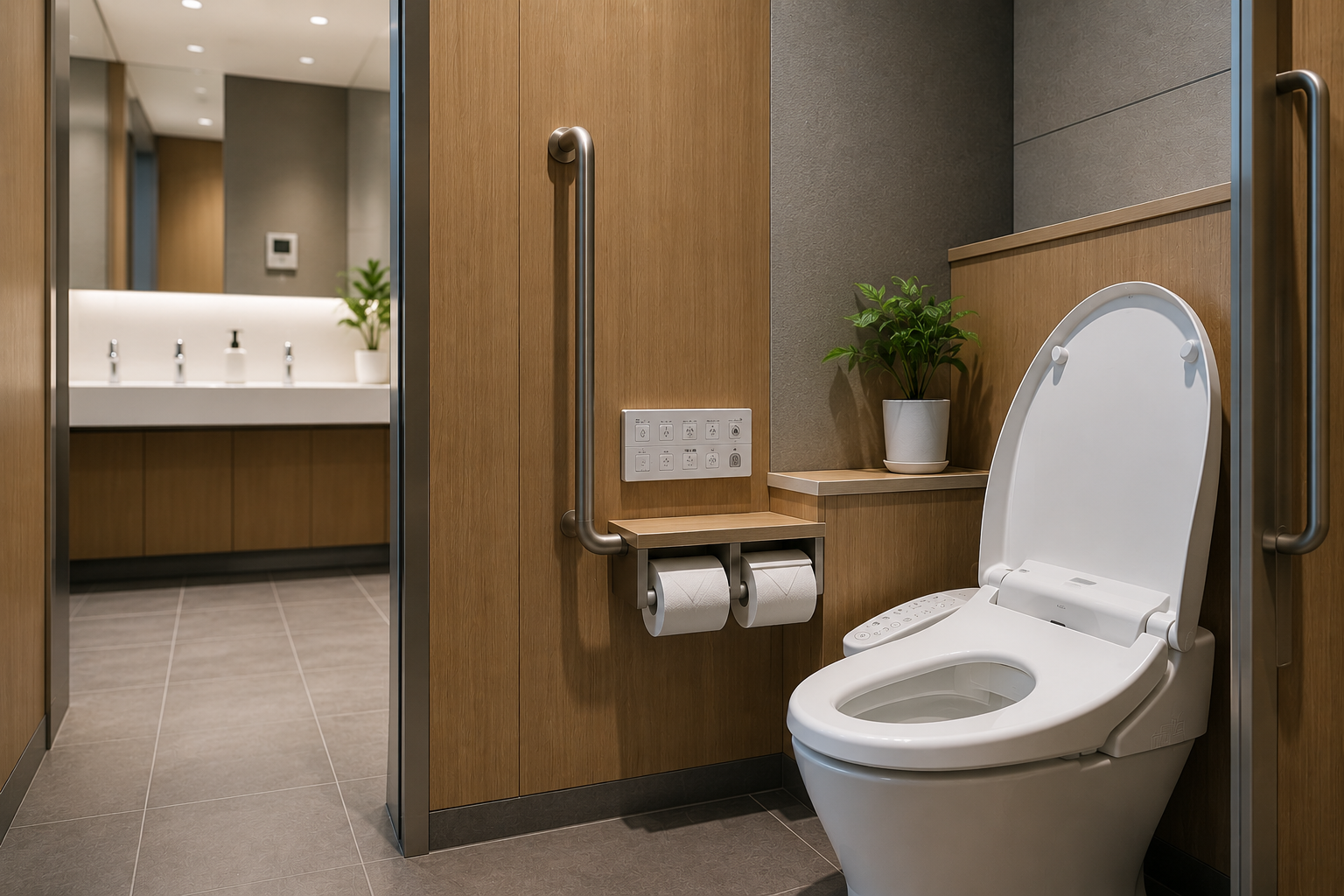
How to Use Public Restrooms in Japan (2026 Guide for First-Time Visitors)
Japan is famous for having some of the cleanest and most advanced public restrooms in the world. If you’re visiting Japan for the first time, you may encounter heated toilet seats, bidet functions, and other features that are uncommon in many countries.
This guide will help you use public restrooms in Japan with confidence.
Where Can You Find Public Restrooms in Japan?
Public restrooms are widely available throughout Japan. You can usually find them at:
- Train stations
- Shopping malls
- Department stores
- Convenience stores
- Parks
- Tourist attractions
- Airports
- Hotels
In major cities like Tokyo, finding a restroom is rarely a problem.
Are Public Restrooms Free?
Yes.
Most public restrooms in Japan are completely free to use.
Unlike some countries, there is usually no entrance fee and no need to tip an attendant.
Types of Toilets in Japan
Western-Style Toilets
Most toilets in Japan are now Western-style.
You may find features such as:
- Heated seats
- Bidet functions
- Automatic flushing
- Automatic lid opening and closing
- Air dryers
Don’t worry if you don’t understand all the buttons. The toilet works perfectly fine without using any of the advanced functions.
Japanese-Style Squat Toilets
Some older buildings and train stations still have traditional squat toilets.
Instead of sitting, you squat facing the hooded end of the toilet.
If you’re not comfortable using one, simply look for another stall, as many facilities also provide Western-style toilets.
Understanding Toilet Buttons
Modern Japanese toilets often have a control panel.
Here are some of the most common buttons:
| Japanese | English |
|---|---|
| おしり | Rear Wash |
| ビデ | Bidet |
| 止 | Stop |
| 流す | Flush |
| 音姫 | Privacy Sound |
The most useful button to remember is 止 (Stop).
Press it if you accidentally activate one of the wash functions.
What Is Otohime?
Many women’s restrooms feature a button called Otohime (音姫).
It plays the sound of running water to provide privacy without wasting actual water.
Feel free to use it if it’s available.
Can You Flush Toilet Paper?
Yes.
In Japan, toilet paper is designed to be flushed.
Unlike in some countries, you should normally flush toilet paper unless there’s a sign specifically telling you not to.
Keep the Restroom Clean
Japanese public restrooms are clean because users are expected to keep them clean.
Please remember to:
- Flush after use
- Dispose of trash properly
- Leave the restroom tidy
- Wash your hands
Being considerate helps everyone enjoy clean facilities.
Family and Accessible Restrooms
Many train stations, shopping malls, and tourist attractions provide:
- Family restrooms
- Baby changing facilities
- Wheelchair-accessible restrooms
These facilities are usually easy to find thanks to universal signs.
Bring a Small Hand Towel
Some public restrooms do not provide paper towels or hand dryers.
Many Japanese people carry a small hand towel, and visitors may find this useful as well.
A small bottle of hand sanitizer can also be helpful.
My first choice is always a department store when I need to use a public restroom.
They usually have the cleanest, most spacious, and best-maintained facilities. Many also offer baby-changing rooms, accessible restrooms, and powder rooms, making them especially convenient for families and travelers.
If you’re sightseeing in a busy shopping area like Ginza, Shinjuku, or Shibuya, heading into a department store is usually your best option.
Final Thoughts
Using public restrooms in Japan is easy once you know what to expect.
Remember:
- Most public restrooms are free.
- Toilet paper is almost always provided.
- Toilet paper can usually be flushed.
- Department stores often have the cleanest facilities.
- Carrying a small hand towel is always a good idea.
Japan’s public restrooms are among the cleanest and most convenient in the world, helping make your trip even more comfortable.