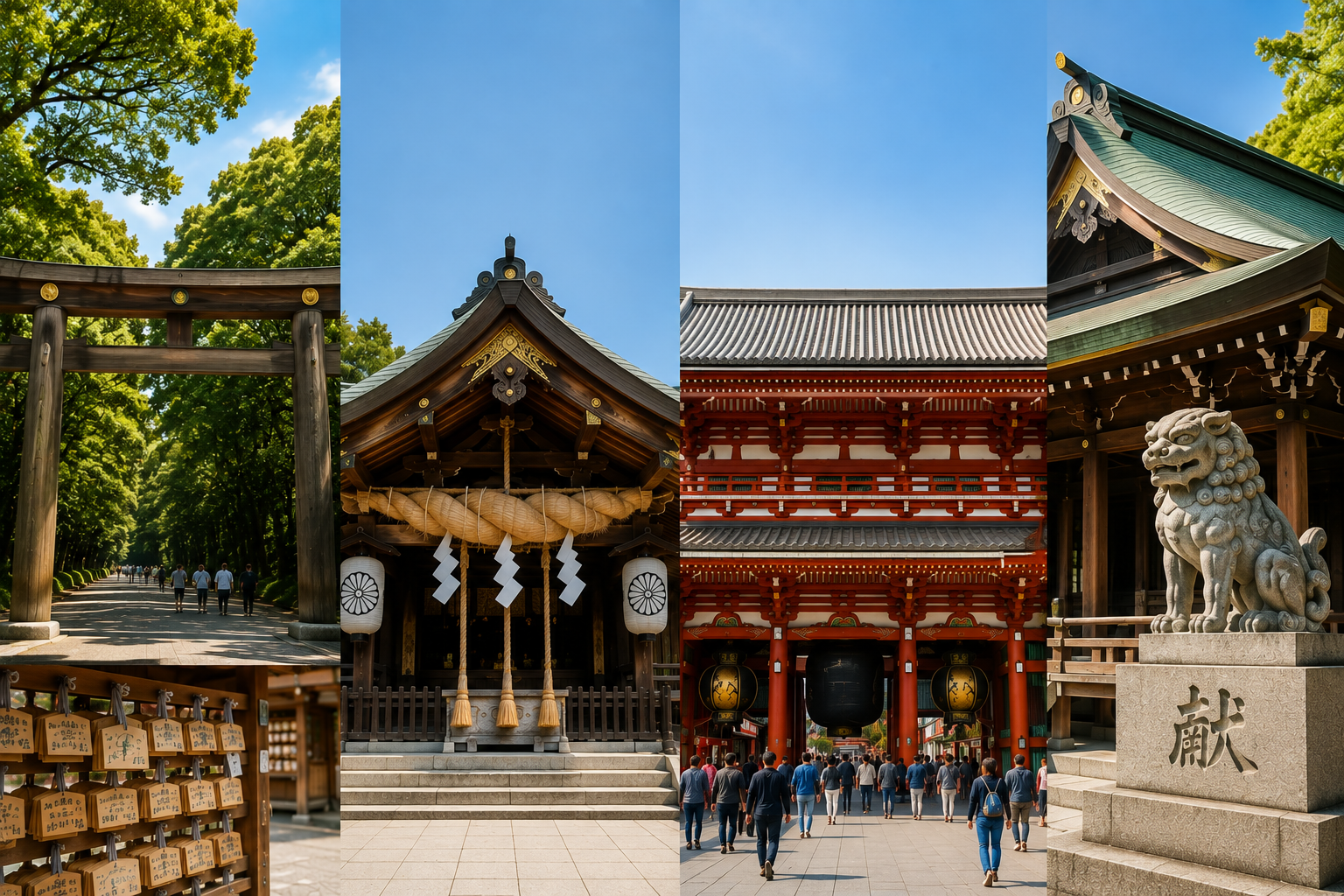
Tokyo is home to hundreds of shrines, but did you know that different shrines are known for different kinds of blessings?
Some are especially popular for love and relationships, while others are visited for success in business, academic achievement, safe travel, family well-being, or protection from bad luck.
You do not need to understand every Japanese deity before visiting a shrine. This guide will help you choose a shrine in Tokyo based on what you would like to pray for.
Why Do People Visit Different Shrines in Japan?
In Shinto, shrines are dedicated to kami, which can be translated as gods, spirits, or sacred beings.
Different kami are associated with different stories and traditions, and over time certain shrines have become especially well known for particular blessings.
A shrine may also enshrine more than one kami, so the categories below are not strict rules. Think of them as a simple way to understand why people choose certain shrines for different occasions.
For Love & Relationships: Tokyo Daijingu
Known for: Love, relationships, marriage
Tokyo Daijingu is one of Tokyo’s best-known shrines for enmusubi, which means forming meaningful connections or relationships.
It is particularly popular with people praying for love, meeting a future partner, or a happy marriage.
The shrine is also associated with the deities worshipped at Ise Jingu, one of Japan’s most important Shinto sites.
Best for: Love, relationships, and marriage
For Business & Career Success: Kanda Myojin
Known for: Business prosperity, career success, good fortune
Located near Akihabara, Kanda Myojin has been important to Tokyo for centuries.
One of its enshrined deities is Daikokuten, one of Japan’s Seven Lucky Gods and a deity strongly associated with prosperity and good fortune.
Business owners and workers often visit the shrine to pray for success and prosperity.
Its location near Akihabara has also made it particularly popular among people working in technology and IT.
Best for: Business, career success, and prosperity
For Academic Success: Yushima Tenjin
Known for: Studying, exams, academic achievement
Students preparing for important exams often visit Yushima Tenjin.
The shrine is dedicated to Sugawara no Michizane, a historical scholar who came to be worshipped as Tenjin, the kami of learning and scholarship.
During exam season, you will see many ema — small wooden prayer plaques — with wishes from students hoping to pass entrance exams or achieve good results.
Best for: Exams, studying, and academic success
For Family & Safe Childbirth: Suitengu
Known for: Safe childbirth, pregnancy, children
Suitengu in Nihonbashi is particularly famous for prayers related to pregnancy, safe childbirth, and children.
Many expectant parents visit the shrine to pray for a safe delivery, and families also come to give thanks after a baby is born.
It is one of Tokyo’s best-known shrines for family-related blessings.
Best for: Pregnancy, safe childbirth, and family well-being
For Good Luck & Protection: Meiji Jingu
Known for: General good fortune, protection, family well-being
Surrounded by a large forest next to Harajuku, Meiji Jingu is one of Tokyo’s most famous Shinto shrines.
It is dedicated to Emperor Meiji and Empress Shoken.
Rather than being associated with only one specific wish, people visit for many reasons, including general good fortune, family happiness, health, and protection.
It is also one of the most popular places in Japan for hatsumode, the first shrine visit of the New Year.
Best for: General blessings, protection, and first-time shrine visitors
For Success, Relationships & Protection: Hie Shrine
Known for: Good fortune, relationships, business, protection
Hie Shrine is located in central Tokyo near Akasaka and is known for a wide range of blessings.
It has historically had strong connections with the city of Tokyo and was particularly important during the Edo period.
The shrine is also famous for its rows of red torii gates and its monkey statues. Monkeys are traditionally regarded as messengers of the shrine’s deity and are also associated with harmonious relationships and family life.
Best for: Good fortune, relationships, business, and protection
For Travel & Traffic Safety: Naritasan Fukagawa Fudodo
Known for: Traffic safety, protection, safe travel
If you are praying for safety while traveling or driving, Naritasan Fukagawa Fudodo in Monzen-Nakacho is a well-known place for traffic-safety prayers.
One important thing to know: this is actually a Buddhist temple, not a Shinto shrine.
In Japan, however, it is completely normal for people to visit both shrines and temples depending on what they are praying for.
Best for: Safe travel, driving, and traffic safety
For Money & Financial Luck: Koami Shrine
Known for: Financial luck, protection, good fortune
Koami Shrine in Nihonbashi is a small shrine that has become especially popular for financial luck.
One of its best-known traditions is zeni-arai, or washing coins and money with sacred water. Visitors traditionally keep the washed money in their wallet as a symbol of financial good fortune.
Despite its small size, the shrine can become very busy, particularly on weekends and lucky calendar days.
Best for: Financial luck, prosperity, and good fortune
For Protection from Bad Luck: Nishiarai Daishi
Known for: Yakuyoke, protection from misfortune
Nishiarai Daishi is one of Tokyo’s best-known places for yakuyoke, or protection from bad luck and misfortune.
Like Naritasan Fukagawa Fudodo, Nishiarai Daishi is a Buddhist temple rather than a Shinto shrine, but many Japanese people visit temples and shrines for similar personal wishes.
It is especially popular with people going through yakudoshi, traditional ages believed to bring a higher risk of misfortune.
Best for: Protection from bad luck and misfortune
Shrine or Temple — Does It Matter?
Shrines and Buddhist temples are different religious institutions, but in everyday Japanese life, people often visit both.
You might visit a shrine for New Year, a temple to visit a family grave, another shrine to pray for exam success, and a temple for protection from bad luck.
For most visitors, the important thing is simply to respect the customs of the place you are visiting.
Can Tourists Make a Wish at a Japanese Shrine?
Yes.
You do not need to be Shinto or Buddhist to visit, pray, buy an omamori charm, write a wish on an ema, or draw an omikuji fortune.
Just remember that shrines and temples are religious places rather than simply tourist attractions.
A little respect goes a long way.
You don’t have to visit the most famous shrine in Tokyo to make a wish. Small neighborhood shrines are an important part of everyday life in Japan, and you may find them much quieter and more personal.
Also, don’t worry too much about finding the “perfect” shrine for your wish. The associations in this guide are traditions rather than strict rules.
If you visit a shrine, take a moment to enjoy the atmosphere, follow basic shrine manners, and experience a part of Japanese culture that is still very much alive today.
Related Guides
・How to Visit a Japanese Shrine or Temple
・Best Traditional Experiences in Tokyo
・Best Things to Do in Tokyo
・Japanese Etiquette for Tourists