Earthquakes are common in Japan, and you may feel a small one during your trip. Most cause little or no disruption, but it is important to know what to do if a stronger earthquake occurs.
You do not need to be afraid of traveling in Japan because of earthquakes. Buildings and transportation systems are designed with earthquakes in mind, and emergency procedures are well established.
Knowing a few basic steps before your trip can help you stay calm and safe.
What to Do During an Earthquake
If you feel strong shaking, your first priority is to protect yourself from falling objects and broken glass.
If You Are Indoors
- Stay away from windows and glass.
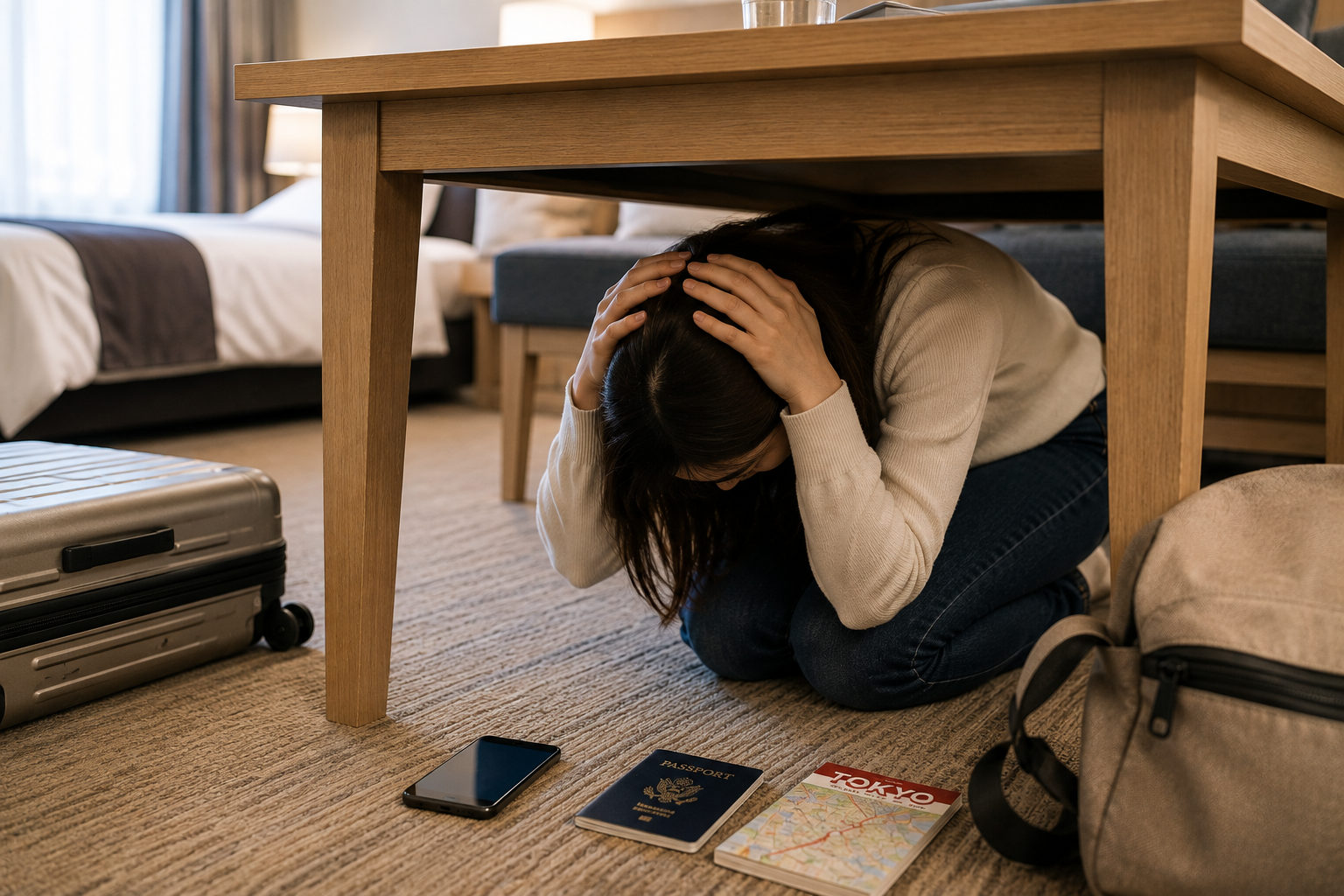
- Protect your head with your arms, a bag, or a cushion.
- If possible, take cover under a sturdy table.
- Do not rush outside while the ground is shaking.
- Do not use elevators.
If you are in a hotel, restaurant, department store, or other large building, follow instructions from staff.
Modern buildings may sway noticeably during an earthquake, especially on higher floors. This can feel frightening, but swaying does not necessarily mean that the building is unsafe.
If You Are Outside
Move away from buildings, glass windows, signs, vending machines, walls, and anything else that could fall.
Protect your head with your bag if necessary.
If you are in a busy area such as Shibuya or Shinjuku, avoid rushing with the crowd. Follow instructions from police and emergency personnel.
If You Are on a Train
Trains may stop automatically when an earthquake is detected.
Stay inside the train unless staff instruct you to leave.
Do not attempt to open the doors or walk along the tracks yourself.
Train services may remain suspended after the earthquake while tracks and equipment are inspected.
If You Are in an Elevator
If an earthquake begins while you are in an elevator, press the buttons for nearby floors and exit as soon as the elevator safely stops.
If the elevator becomes stuck, use the emergency call button and wait for assistance.
Do not try to force the doors open.
If You Are Near the Coast
A strong earthquake near the coast may create a tsunami risk.
If you feel strong or prolonged shaking in a coastal area, move to higher ground or a designated tsunami evacuation area and follow official instructions.
Do not go to the beach to check the ocean.
Tsunami warnings and advisories may be issued even when there is little visible damage from the earthquake itself.
What to Do After the Shaking Stops
Strong earthquakes are often followed by aftershocks.
After the initial shaking:
- Check yourself and others for injuries.
- Stay away from damaged buildings and broken glass.
- Do not use elevators.
- Be prepared for aftershocks.
- Follow instructions from local authorities.
- Check official information before traveling.
If you are staying at a hotel, ask the front desk for information. Hotel staff can often provide guidance about transportation, evacuation areas, and local conditions.
Expect Transportation Disruptions
One of the biggest problems tourists may experience after an earthquake is transportation disruption.
Trains and subway services may stop temporarily while safety inspections are carried out.
Even if there is no major damage, you may need to wait several hours before services resume.
Do not immediately attempt to walk a long distance across Tokyo unless authorities recommend doing so. Stations and streets can become extremely crowded after a major earthquake.
If you are at your hotel and it is safe to remain there, staying there until transportation conditions become clearer may be the easiest option.
How to Get Reliable Emergency Information
After an earthquake, avoid relying only on social media, where incorrect information can spread quickly.
Useful official sources include:
- Japan Meteorological Agency (JMA)
- Local government emergency information
- NHK WORLD-JAPAN
- Transportation company websites and apps
The Japan Meteorological Agency provides earthquake and tsunami information in English.
Useful Apps for Earthquake Alerts
Consider installing an emergency information app before your trip.
Safety tips is an official app supervised by the Japan Tourism Agency for international visitors. It provides push notifications for earthquakes, tsunami warnings, severe weather, and other emergencies.
Your smartphone may also receive emergency alerts automatically depending on your device, SIM card, and settings.
Emergency Numbers in Japan
For emergencies:
Police: 110
Ambulance and Fire: 119
If you need medical assistance but are unsure what to do, hotel staff can also help you contact emergency services.
Prepare Before Your Trip
You do not need a complicated earthquake survival kit for a normal vacation, but a few simple preparations can help.
Keep the following easily accessible:
- Passport or a copy of your passport information
- Hotel name, address, and phone number
- Portable phone charger
- Some cash
- Water
- Any essential medication
It is also useful to know where the emergency exits are when you arrive at your hotel.
If a small earthquake happens while you are in Japan, you may notice that people around you remain surprisingly calm. Small earthquakes are relatively common, and most do not require any special action afterward.
For a stronger earthquake, however, do not assume that everything is safe simply because other people appear calm. Check official information and follow instructions from hotel staff, station employees, police, or local authorities.
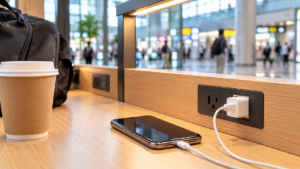
Also keep a portable charger with you when sightseeing. After a major earthquake, your phone can become extremely important for receiving emergency alerts, checking transportation information, using maps, and contacting your hotel or family.
Related Guides
・Emergency Guide for Tourists in Japan
・Where to Find English-Speaking Doctors in Tokyo
・What to Do If You Lose Your Passport in Japan
・What to Do If You Lose Your Phone in Tokyo
・Travel Insurance for Japan